Aquaman Pilot: The Development and Production of the Smallville Spin-off
The journey of the Aquaman pilot began not as a planned series, but as a successful experiment within the world of Smallville. While many superhero shows follow a strict blueprint, the development of this project was an organic evolution sparked by high viewer engagement and a desire to expand the DC television universe.
From Smallville Episode to Standalone Concept
The concept for the series originated from the Smallville season five episode titled "Aqua." In this episode, Arthur Curry, played by Alan Ritchson, arrived in Smallville to thwart an underwater weapons project developed by LuthorCorp. Although "Aqua" was the highest-rated episode of the season, it was not originally designed as a backdoor pilot—a television episode used to test the viability of a spin-off series.
Despite the lack of initial intent, creators Alfred Gough and Miles Millar recognized Arthur Curry's potential. While they also considered a series centered on Lois Lane, they felt more confident in the Aquaman concept, envisioning a long-term franchise spanning 100 episodes.
Developing the Character and Mythology
To establish a distinct identity, Gough and Millar decided that the series would not be a direct spin-off. Consequently, Alan Ritchson was not brought back for the lead role. The creators aimed for a different interpretation of the Aquaman legend, though Gough suggested the possibility of future crossovers with Smallville. Early working titles for the project included Tempest Keys and Mercy Reef before it was officially listed as Aquaman upon its iTunes release.
Powers and Personality
Unlike many traditional superheroes who struggle with secret identities, the version of Arthur Curry portrayed by Justin Hartley was comfortable with his abilities. Hartley noted that his character used his powers for personal gain and was not afraid to flaunt them. According to Gough, Arthur's abilities included:
- Superhuman swimming speed: Demonstrated in the pilot by his ability to keep pace with a fighter jet.
- Underwater respiration: The ability to breathe underwater, allowing him to swim near the ocean floor.
- Enhanced strength: Super strength specifically while submerged.
- Water-based empowerment: Exposure to water while on land provided a power boost.
The writers also introduced a critical vulnerability: dehydration. Similar to Clark Kent's weakness to kryptonite, Arthur would weaken and dehydrate if he lacked access to water.
Story Arcs and Themes
The production team planned thirteen episodes, focusing heavily on environmental themes such as evil oil companies and ocean polluters. While mythology played a minor role, the creators adhered to the most classic version of the Aquaman comic book mythology. One planned story arc involved the character McCaffery being captured and taken to Atlantis.
Casting and Production Details
The casting process was extensive, with over 400 candidates auditioned from the United States, Canada, Australia, and England. Will Toale was initially cast as Arthur Curry but was replaced by Justin Hartley before filming commenced. The supporting cast featured Ving Rhames, Lou Diamond Phillips, Adrianne Palicki (as the Siren Nadia), and Denise Quiñones.
Interestingly, several cast members had previous ties to Smallville. Denise Quiñones, Adrianne Palicki, Rick Peters, and Kenny Johnson had all appeared in guest roles on the parent series prior to the pilot.
Filming and Technical Execution
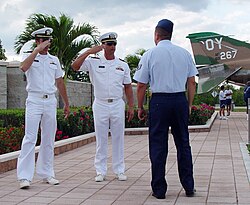
Filming took place in March 2006 in North Miami, Florida, with an estimated budget of $7 million. Exterior scenes were shot in Coconut Grove and at the Homestead Air Reserve Base. To ensure authenticity, the production utilized fighter aircraft and personnel from the 482nd Fighter Wing as extras.
To maintain military accuracy, Staff Sergeant Leo Castellano provided training to the actors on the correct way to present arms.
The production faced significant technical challenges due to the underwater sequences. Justin Hartley, who was not a certified scuba diver, filmed his underwater scenes by breathing from the tanks of safety divers. Special effects were handled by Entity FX, the same firm responsible for Smallville's effects since its second season.
Key Facts
- Origin: Inspired by the high-rated Smallville episode "Aqua."
- Budget: Approximately $7 million.
- Lead Actor: Justin Hartley replaced Will Toale in the role of Arthur Curry.
- Filming Location: North Miami, Florida, including Homestead Air Reserve Base.
- VFX Partner: Entity FX.
- Core Weakness: Dehydration when away from water.
| Category | Details |
|---|---|
| Creators | Alfred Gough and Miles Millar |
| Director (Pilot) | Greg Beeman |
| Primary Location | North Miami, Florida |
| Planned Episodes | 13 |
| Lead Character | Arthur Curry (A.C.) |
Frequently Asked Questions
Was the Aquaman pilot a direct spin-off of Smallville?
No. While it was inspired by a Smallville episode, the creators intended it to be a different version of the Aquaman legend rather than a direct continuation, which is why the original actor from Smallville was not cast.
What were the rumored titles for the show?
Before being titled Aquaman, the series was rumored to be called Tempest Keys or Mercy Reef.
How did the production handle underwater filming?
Much of the filming was done in the ocean. Lead actor Justin Hartley performed his scenes without a scuba tank, instead relying on safety divers for air.
What specific powers did this version of Arthur Curry possess?
He could breathe underwater, swim at speeds comparable to a fighter jet, and possessed super strength while submerged. Additionally, water exposure on land boosted his powers.
Who provided the special effects for the pilot?
Entity FX, the company that had worked on Smallville since its second season, was contracted for the pilot's special effects.