Appletons' Cyclopædia of American Biography: A Legacy of Authority and Hoaxes
Published between 1887 and 1889, Appletons' Cyclopædia of American Biography was designed as a definitive record of the notable figures who shaped the history of the New World. For several decades, its unsigned articles were regarded as authoritative sources of biographical information. However, the work later became notorious for a surprising flaw: the inclusion of dozens of detailed biographies of people who never actually existed.
Despite its later reputation for inaccuracies, the Cyclopædia was a massive undertaking of its time, aiming to encompass all noteworthy persons across North and South America.
Key Facts
- Scope: Included over 20,000 U.S. citizens and several thousand citizens from other American countries.
- Foreign Influence: Featured nearly 1,000 foreign-born individuals closely tied to American history.
- Visuals: Contained approximately 60 full-page portraits, 1,500 vignette portraits with facsimile autographs, and hundreds of historical views.
- The Hoax: Contains 144 known fictitious biographies and nine others deemed suspicious.
- Publication: First published by D. Appleton and Company (New York) between 1887 and 1889.
Structure and Composition
The Cyclopædia was a comprehensive effort, incorporating the work of Francis S. Drake. Specifically, it utilized the material from Drake's 1872 Dictionary of American Biography, including his original material, corrections, and notes gathered for a second edition before his death in 1885.
One of the most unusual aspects of the work was its anonymity. None of the articles were signed with names or initials. To identify an author, readers had to consult an alphabetical list of contributors and their respective works. This method was criticized by contemporary reviewers as inconvenient, and in some cases, such as the biography of President Grover Cleveland, the author remains unknown despite searches of the contributor lists.
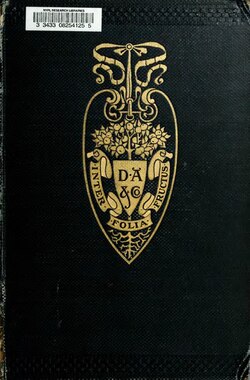
The Mystery of the Fictitious Biographies
The prestige of the Cyclopædia was shaken in 1919 when John Hendley Barnhart discovered 14 biographical sketches of supposed European botanists in Latin America who did not exist. By 1939, the number of discovered fictitious biographies grew to 47, though only the sections for the letters H and V had been systematically checked at that time.
Analysis of the Hoax
In 1937, Margaret Castle Schindler of Goucher College assessed these fraudulent entries. She noted that the author likely possessed scientific training and linguistic skills, as the fake subjects were mostly scientists with titles invented in six different languages. While the author used real geographical locations and genuine historical events to lend credibility, subtle mistakes eventually exposed the fraud.
Schindler identified several red flags that reveal a fictitious biography:
- Details copied from other legitimate biographies within the same Cyclopædia.
- Anachronisms and factual errors regarding geography or institutions.
- A disconnect between the subject's attributed profession and the titles of their supposed literary works.
- Incompatibility between the subject's nationality and the language used in their publications.
- Grammatical or spelling errors in titles that would be unlikely for a prominent scholar.
Potential Authors of the Fraud
Researchers have attempted to pinpoint the culprits. Joseph Cantillion identified William Christian Tenner as the author of 43 fictitious "phantom Jesuit" articles. Other researchers, such as Dobson, suggested Hermann Ritter—who provided articles on South and Central Americans starting in Volume III—as a likely candidate. Interestingly, the first two volumes, managed by Juan G. Puron, are largely free of these fabrications.
Publication History and Editions
The original six-volume set was edited by James Grant Wilson and John Fiske, with Rossiter Johnson serving as managing editor from 1886 to 1888. A seventh volume was released in 1901, providing an appendix, supplementary lists, and thematic indexes. The work was later republished without corrections by the Gale Research Company in 1968.
| Feature | Details |
|---|---|
| Original Publication | 1887–1889 |
| Total Volumes | 6 (Original) + 1 (Supplement, 1901) |
| Total Subjects | 20,000+ US citizens; several thousand others in the Americas |
| Known Fakes | 144 confirmed fictitious biographies |
| General Editors | James Grant Wilson and John Fiske |
Frequently Asked Questions
Why are there fake biographies in the Cyclopædia?
The fraud occurred because contributors were paid based on the length of their articles, and the editorial staff only checked the form of the submissions rather than verifying the factual existence of the subjects.
Who first discovered the fictitious entries?
John Hendley Barnhart first identified the hoax in 1919 after finding 14 fake biographies of European botanists.
Are all the biographies in the work unreliable?
No. Margaret Castle Schindler noted that the work remains valuable and authoritative in many respects, though she advised that articles on Latin American subjects be verified against other sources.
How can a reader spot a fake biography in this collection?
Look for linguistic inconsistencies (e.g., a subject's nationality not matching the language of their books), blatant anachronisms, or titles containing grammatical errors that a professional scientist would not make.
Was the title of the work often misspelled?
Yes, many authors erroneously refer to it as "Appleton's" (singular possessive) instead of the correct "Appletons'" (plural possessive).