Apostasy in Islam: Definitions, Legal Perspectives, and Contemporary Debates
Apostasy in Islam, known in Arabic as ridda or irtidād, refers to the abandonment of all or part of the Islamic faith by a current or former Muslim. This transition can occur through thought, word, or deed. An individual who leaves the faith is referred to as a murtadd (apostate).
Apostasy is not limited to the explicit renunciation of faith or conversion to another religion. It also encompasses blasphemy or heresy—actions or utterances that imply unbelief or the denial of a fundamental tenet or creed of Islam, even by those who still consider themselves Muslims.
While traditional Islamic jurisprudence often prescribes the death penalty for those who refuse to repent, the definition of what constitutes apostasy and the appropriate punishment remain subjects of intense debate among scholars. Modern liberal Islamic movements frequently reject physical punishments entirely, citing a conflict with international human rights norms, such as the Universal Declaration of Human Rights.

Key Facts
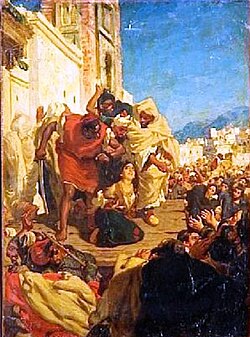
- Definition: Apostasy (ridda) is the abandonment of Islam through belief, speech, or action.
- Terminology: A person who commits apostasy is called a murtadd.
- Scope: Includes conversion to other faiths, atheism, and certain forms of heresy or blasphemy.
- Legal Conflict: Traditional death penalties for apostasy conflict with international treaties on freedom of religion.
- Diversity of Opinion: Views range from strict adherence to capital punishment to total rejection of physical penalties.
Defining Apostasy and Heresy

Defining the exact boundary of apostasy is complex. Scholars like Kamran Hashemi classify unbelief into different phenomena, while others highlight specific acts that may be viewed as apostasy. These often include:
- Denying the obligatory nature of a practice established by ijma (legal consensus of scholars).
- Mocking, doubting, or denying the existence of God or the prophethood of Muhammad.
- Believing that causes exist independently of the will of God.
- Asserting that the Quran was created or translating it into languages other than Arabic.
- Rejecting the validity of sharīʿah (Islamic law) courts or ridiculing Islamic scholars.
- Celebrating non-Islamic holidays, such as the Iranian New Year (Nowruz).
![Legal opinion on apostasy by the Fatwa committee at Al-Azhar University in Cairo, concerning the case of a man who converted to Christianity: "Since he left Islam, he will be invited to express his regret. If he does not regret, he will be killed according to rights and obligations of the Islamic law." The Fatwa also mentions that the same applies to his children if they entered Islam and left it after they reach maturity.[140]](/images/aa/a4/aaa48fd75b5c756a47adf96395a8de8cb2c6c09ca9d7d4e89f5b28fed9cc4add.jpg)
Overlap with Blasphemy
There is a significant overlap between apostasy and blasphemy. While apostasy is the act of leaving the faith, blasphemy involves the perceived insult of the divine or the prophets. In many legal systems, these two are prosecuted under similar frameworks.
Punishments and Legal Consequences
In classical Islamic jurisprudence, the penalty for apostasy is often the death penalty, provided the individual is given an opportunity to repent. However, the application of this penalty varies wildly in practice.
Civil and Social Liabilities
Beyond physical punishment, apostasy often carries severe civil consequences:
- Property: The assets of the apostate may be seized and distributed among Muslim relatives.
- Marriage: Marriages may be annulled (faskh).
- Social Status: Apostates may face social ostracization or be barred from marrying within the community.
![Penalties for apostasy in Muslim-majority countries as of 2020.[255] Many other Muslim countries impose a prison term for apostasy or they prosecute it under blasphemy or other laws.[257]](/images/ef/7e/ef7eb0fd4b327c91250a39069e9e33e04e1e9d0cc28a0371df4da675cd5eb91d.webp)
The Debate Over the Death Penalty
The rationale for the death penalty often centers on the preservation of the community and the faith. Conversely, opponents argue that the Quran emphasizes that there is "no compulsion in religion" (Al-Baqara 2:256). They argue that faith is a personal matter and that forced adherence is meaningless.
Global Perspectives and Public Opinion
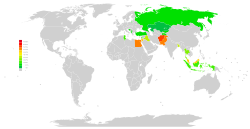
Public support for the death penalty for apostasy varies significantly by region. Data from the 2013 Pew report indicates a wide spectrum of belief regarding the application of sharia law and capital punishment for apostates.
| Country | % Support Sharia (Group A) | % of Group A Supporting Death for Apostasy | % of Total Muslims Supporting Death Penalty |
|---|---|---|---|
| Afghanistan | 99% | 79% | 78.2% |
| Pakistan | 84% | 76% | 63.8% |
| Egypt | 74% | 86% | 63.6% |
| Indonesia | 72% | 18% | 13.0% |
| Turkey | 12% | 17% | 2.0% |
| Albania | 12% | 8% | 1.0% |
Historical and Modern Context
Historically, apostasy has been linked to political rebellion. In the early Islamic period, leaving the faith was often seen as an act of treason against the state. In the modern era, the rise of secularism and international human rights law has shifted the conversation toward individual liberty.
Many ex-Muslims today identify as atheists or convert to other religions, such as Christianity. These individuals often face varying degrees of risk depending on the laws of their home country, ranging from social pressure to legal prosecution.
![Greek Christians in 1922, fleeing from their homes in Kharput and moving to Trebizond. In the 1910s and 1920s, the Armenian, Greek, and Assyrian genocides were perpetrated by the Ottoman Empire and its successor state, the Republic of Turkey.[248]](/images/c0/06/c006ef4cc65cd2970c213e71c6de6197b04949a555b5e03aa7cc5bcdc9a669fa.jpg)
Frequently Asked Questions
What is the difference between apostasy and blasphemy?
Apostasy is the act of leaving the Islamic faith entirely or denying a fundamental tenet. Blasphemy is the act of insulting or showing contempt for God, the Prophet, or sacred things. While distinct, they are often treated similarly under certain legal codes.
Is the death penalty for apostasy practiced everywhere?
No. While it exists in the classical jurisprudence of some schools of thought and is law in a few countries, many Muslim-majority nations do not apply it. Some impose prison terms, while others have no legal penalty for changing one's religion.
What does the Quran say about forced conversion?
Opponents of the death penalty for apostasy frequently cite verse 2:256 of the Quran, which states that "there is no compulsion in religion," arguing that faith must be voluntary.
What are the civil consequences of apostasy?
Depending on the jurisdiction and school of law, an apostate may face the annulment of their marriage, the loss of property rights, and the loss of certain legal standings within the community.
How do international human rights laws view apostasy laws?
International instruments, including the Universal Declaration of Human Rights and the International Covenant on Civil and Political Rights, protect the freedom of religion, which includes the right to change one's religion or belief. Consequently, they view the criminalization of apostasy as a violation of human rights.