Anthomyiidae: An Overview of the Diverse Root-Maggot Fly Family
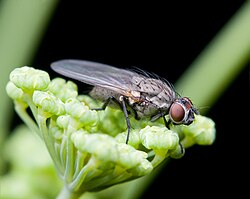
The Anthomyiidae represent a large and highly diverse family of flies within the superfamily Muscoidea. Often appearing similar to small houseflies, these insects play various roles in their ecosystems, ranging from essential pollinators to significant agricultural pests. The family name itself is derived from the Greek words anthos (flower) and myia (fly), a nod to the role some adults play in visiting blossoms.
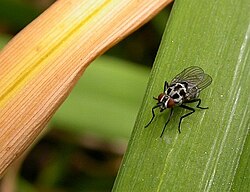
While many species are difficult to distinguish without close inspection, they exhibit a wide range of colors and behaviors. Most are drab shades of grey or black, though certain genera like Pegomya can be yellow, and others like Anthomyia and Eutrichota display striking black-and-white or black-and-silvery-grey patterns.
Key Facts
- Common Name: Often referred to as "root-maggots" due to larval habits.
- Appearance: Typically small to moderate-sized flies, mostly grey or black.
- Ecological Roles: Includes pollinators, scavengers, leaf miners, and parasites.
- Agricultural Impact: Certain species in the genus Delia are major crop pests.
- Larval Habitats: Found in plant stems, roots, decaying matter, and even bird nests.
Biological Classification and Diversity
The Anthomyiidae belong to the order Diptera (true flies) and the class Insecta. The family is broadly divided into two primary subfamilies: Anthomyiinae and Pegomyinae. This division encompasses a vast array of genera, each adapted to specific ecological niches.
Subfamily Anthomyiinae
This subfamily includes several tribes, such as Anthomyiini, Chirosiini, and Hydrophoriini. Notable genera within this group include Anthomyia, Fucellia (the conspicuous seaweed or kelp flies found on beaches), and Delia.
Subfamily Pegomyinae
The Pegomyinae subfamily is organized into tribes like Pegomyini and Myopinini, featuring genera such as Pegomya, Myopina, and Eutrichota.
Ecological Roles and Agricultural Importance
The life cycles of Anthomyiid flies are incredibly varied. Depending on the species, the larvae may function as:
- Root-maggots: Feeding on the stems and roots of various plants.
- Scavengers: Consuming organic matter in locations like birds' nests.
- Leaf miners: Living and feeding within the tissue of leaves.
- Specialized feeders: Acting as inquilines, commensals, or parasites.
From an agricultural perspective, certain members of the genus Delia are notorious pests. These species can cause significant damage to vegetable and grain crops. Key examples include:
- Onion fly (D. antiqua)
- Wheat bulb fly (D. coarctata)
- Turnip root fly (D. floralis)
- Seedcorn maggot (D. platura)
- Cabbage root fly (D. radicum)
Conversely, in specific environments such as mountainous regions, adult Anthomyiids are frequent flower visitors and contribute to the process of pollination.
Morphological Characteristics
Identifying Anthomyiidae requires attention to specific anatomical details. These flies are generally small to moderate in size. Key identifying features include:
- Thorax: The hypopleural bristles on the sides of the thorax are apical.
- Wings: The anal vein typically reaches the wing margin (with the exception of the genus Chelisia), and the median vein is straight rather than curved toward the anterior alar margin.
- Bristles: Three pairs of postsutural dorsocentral bristles are almost always present.
- Eyes: In most males, the eyes are close-set or contiguous.
Summary of Anthomyiidae Classification
| Rank | Classification |
|---|---|
| Kingdom | Animalia |
| Phylum | Arthropoda |
| Class | Insecta |
| Order | Diptera |
| Family | Anthomyiidae |
Frequently Asked Questions
Why are some Anthomyiidae called root-maggots?
They are given this name because their larvae are frequently found feeding within the stems and roots of various plant species.
Are all Anthomyiidae flies pests?
No. While some species like the cabbage root fly are significant agricultural pests, others serve beneficial roles, such as pollinators in mountain environments or scavengers in the ecosystem.
What are kelp flies?
Kelp flies (genus Fucellia) are a conspicuous group of Anthomyiidae often found on beaches.
How can I distinguish these flies from houseflies?
While they look similar, specific morphological traits such as the position of the hypopleural bristles, the structure of the wing veins, and the presence of specific dorsocentral bristles are used for scientific identification.
What is the diet of Anthomyiid larvae?
Larval diets vary widely; they may consume plant roots and stems, decaying plant material, or act as parasites and scavengers.