Animal Hides and Skins: History, Production, and Modern Uses
In the world of materials, the terms hide and skin are often used interchangeably, but the industry maintains a clear distinction. A hide or skin is an animal skin treated for human use. Derived from the Dutch huid and German Haut, these materials have served as fundamental resources for clothing, shelter, and tools since prehistoric times.
Industry standards define hides as the skins of large animals, such as cows and buffalo. In contrast, skins refer to those from smaller animals, including goats, sheep, deer, pigs, fish, alligators, and snakes. While some skins are still gathered through hunting and processed by artisans, the vast majority of leather production is now a large-scale industrial process.
Key Facts
- Hides come from large animals (e.g., cattle); skins come from smaller animals (e.g., sheep, goats).
- Tanning is the primary chemical process used to convert raw skins into durable leather.
- Parchment and vellum are specialized forms of processed skins used as writing surfaces.
- Historically, the demand for beaver hats drove early North American exploration and colonization.
- Modern applications range from high-end fashion and automotive upholstery to pet chew toys.
The Historical Evolution of Hide Use
Archaeologists believe that animal hides were essential for the survival of prehistoric humans, providing critical warmth through clothing and protection via shelter. This reliance continues in various cultures today; for example, the Inuit traditionally utilize hides for waterproof clothing, kayaks, and summer tents.
Throughout history, hides have served diverse functional purposes:
- Military Defense: In early medieval Europe, hides were draped over wooden castles to protect them from fire during sieges.
- Indigenous Architecture: Various American Indian tribes used hides to construct tepees, wigwams, and moccasins.
- Musical Instruments: Until the 1950s, animal hides were the standard material for drum heads before the invention of plastic.
Writing Materials and Commerce
During the Iron Age, processed skins were transformed into parchment and vellum (a high-quality skin-based paper), likely introduced in Pergamon in the Eastern Mediterranean. By approximately 1300, the Assize of Weights and Measures in England listed rawhide, gloves, and parchment as primary commercial items.
Trade was highly standardized. A "last" of leather consisted of 20 "dickers" (each containing 10 cowhides). Smaller skins, such as rabbit and squirrel, were traded in "timbers" of 40, while others were traded in "binds" of 32 or 33 skins.
Status Symbols and Global Impact
Rare furs have long signaled social status. European nobility frequently wore ermine fur, characterized by black-tipped tails creating a diamond pattern on white. The 17th and 18th-century obsession with beaver hats significantly influenced the colonization of Canada. However, this high demand often led to over-hunting of species like sea otters and sparked conflicts between native tribes over productive hunting grounds.
Production and Processing
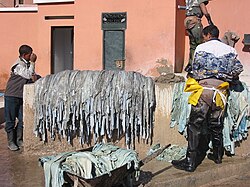
The transformation of a raw skin into a usable material typically involves several steps. Most hides and skins are processed fresh or salted before undergoing tanning—the process of treating skins to produce leather. Some skins are stretched and dried prior to this process.
While many materials come from domesticated livestock, some fur-bearing animals like mink and rabbit are farmed in captivity. Others, such as wolves and lynx, are still trapped in the wild.
Modern Applications
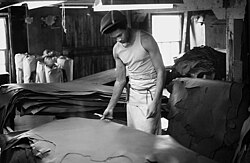
Today, leather and skins are utilized across a vast array of industries:
| Category | Common Materials | Typical Applications |
|---|---|---|
| Fashion & Accessories | Cattle, Goat, Alligator, Snake | Shoes, bags, belts, coats, gloves |
| Interior & Transport | Cattle, Buffalo | Car upholstery, furniture, decorating |
| Music & Arts | Dog, Cat, Snake, Fish | Drum heads, Sanxian, Shamisen, Bookbinding |
| Specialized Gear | Kangaroo, Stingray | Bullwhips, sword grips |
| Other | Pig, Cattle | Pork rinds, pet chew toys |
Controversy and Ethics
The use of animal skins is a point of significant contention. Animal rights organizations, such as PETA, have campaigned against the fur and leather industries. These protests have evolved from campaigns like "I would rather go naked than wear fur" and "Ink, not Mink" to more direct actions. In response to these ethical concerns, many artificial leather and fur alternatives have become available as more affordable and cruelty-free options.
Frequently Asked Questions
What is the difference between a hide and a skin?
In industrial terms, a hide comes from a large animal (such as a cow or buffalo), whereas a skin comes from a smaller animal (such as a sheep, goat, or snake).
What are parchment and vellum?
Parchment and vellum are types of writing surfaces made from processed animal skins, which were widely used before the prevalence of modern paper.
How is leather produced from a raw hide?
Hides are typically processed fresh or salted and then undergo tanning, a chemical process that preserves the skin and turns it into durable leather.
Which animals are used for specialized musical instruments?
The Chinese sanxian and Okinawan sanshin use snakeskin, while the Japanese shamisen uses dogskin (for students) or catskin (for professionals). Traditional drums often use various natural skins.
Why was the fur trade historically significant in North America?
The high demand for beaver hats in the 17th and 18th centuries drove early exploration and the colonization of North America, particularly in present-day Canada.