Angra Nuclear Power Plant
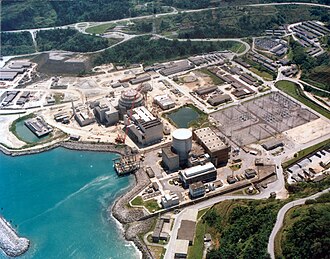
The Angra Nuclear Power Plant, officially known as the Central Nuclear Almirante Álvaro Alberto (CNAAA), serves as the cornerstone of Brazil's nuclear energy production. Located on Itaorna Beach in Angra dos Reis, Rio de Janeiro, this facility utilizes the South Atlantic Ocean for cooling and is the only nuclear power site currently operating in the country.
The complex is managed by Eletronuclear, a state-owned company that holds a monopoly on nuclear power generation in Brazil. Beyond its energy output, the site is a significant economic driver for the region, employing approximately 3,000 direct staff and supporting an additional 10,000 indirect jobs within the state of Rio de Janeiro.
Key Facts
- Official Name: Central Nuclear Almirante Álvaro Alberto (CNAAA).
- Location: Angra dos Reis, Rio de Janeiro, Brazil.
- Operator: Eletrobrás Termonuclear S.A. (Eletronuclear).
- Technology: Pressurized Water Reactors (PWR).
- Operational Capacity: Two active units with a combined net capacity of 1,854 MWe.
- Capacity Factor: 88.4% (recorded between 2014 and 2018).
The Evolution of the Complex
The development of the Angra complex began in 1971 with a vision to establish a robust nuclear infrastructure. The first unit, Angra I, was purchased from the American company Westinghouse. While the design for the balance of plant was handled by Gibbs and Hill in association with PROMON Engenharia S.A., and construction was managed by Brasileira de Engenharia S.A., the purchase did not include the transfer of sensitive reactor technology.
To overcome technology gaps, Brazil entered a comprehensive nuclear agreement with West Germany in 1975 under President Ernesto Geisel. This partnership led to the construction of Angra II, which utilizes pre-Konvoi German technology. The original master plan envisioned three PWR units totaling roughly 3,000 MWe, serving as the first of four planned nuclear plants to be built by 1990.
Reactor Specifications
The plant currently operates two Pressurized Water Reactors (PWR)—a type of reactor that uses water under high pressure to prevent boiling, acting as both a coolant and a neutron moderator.
| Unit | Reactor Type | Construction Start | Commercial Operation | Net Electric Power | Status |
|---|---|---|---|---|---|
| Angra I | Westinghouse 2-loop PWR | May 1, 1971 | January 1, 1985 | 609 MWe | Operational |
| Angra II | Siemens Pre-Konvoi PWR | January 1, 1976 | February 1, 2001 | 1,245 MWe | Operational |
| Angra III | Siemens Pre-Konvoi PWR | June 1, 2010 | Pending | 1,405 MWe | Under Construction |
Future Developments and Angra III
The journey of Angra III has been marked by several interruptions. Initial work began in 1984 but was halted in 1986, leaving approximately 70% of the equipment in storage for decades. After various approvals and delays, construction resumed on June 1, 2010, with an initial target date of 2018.
Following a pause in 2014, the Brazilian government considered auctioning the incomplete station to private investors in 2018. However, recent updates indicate a renewed commitment to state-led completion. In November 2021, the government rescheduled the completion of Angra III for 2026–27. A contract signed in February 2022 with a specialized consortium aims to bring the reactor online by 2026. Furthermore, the government has announced plans for a fourth nuclear power plant, targeted for inauguration in 2031.
Frequently Asked Questions
Who operates the Angra Nuclear Power Plant?
The plant is operated by Eletronuclear (Eletrobrás Termonuclear S.A.), a state-owned company that holds the monopoly on nuclear power generation in Brazil.
What type of technology is used in the reactors?
The facility uses Pressurized Water Reactors (PWR). Angra I utilizes Westinghouse technology from the USA, while Angra II and the upcoming Angra III utilize Siemens pre-Konvoi technology from Germany.
When did the plant first start providing power?
The first unit, Angra I, was connected to the power grid and began commercial operation on January 1, 1985.
What is the current status of Angra III?
Angra III is currently under construction. After several decades of delays and halts, construction resumed in November 2022, with a projected operational start date in 2026.
Does Brazil plan to build more nuclear plants?
Yes, in addition to completing Angra III, the Brazilian government announced plans in November 2021 to construct a fourth nuclear power plant, intended to be inaugurated by 2031.