Anemone: The Fascinating World of Windflowers
Commonly known as windflowers, the Anemone genus comprises a diverse group of flowering perennials belonging to the buttercup family, Ranunculaceae. These plants are found across temperate and subtropical regions of the globe, appearing in almost every corner of the world except for Australia, New Zealand, and Antarctica. From delicate woodland ephemerals to striking garden favorites, anemones offer a wide array of colors and forms that have captivated botanists and gardeners alike for centuries.
Key Facts
- Common Name: Windflowers
- Family: Ranunculaceae (Buttercup family)
- Native Regions: Temperate and subtropical regions worldwide (excluding Australia, New Zealand, and Antarctica)
- Flower Characteristics: Often lack true petals; instead, they feature colorful sepals
- Common Colors: White, pink, red, and various shades of violet
Botanical Description and Taxonomy
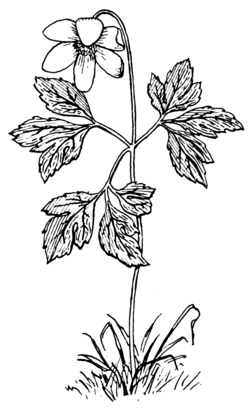
Anemones are characterized by their perennial nature, meaning they live for more than two years. They typically feature basal leaves with long stems that can grow either upright or prostrate (creeping along the ground). These leaves may be simple or compound, with edges that are either smooth (entire) or toothed.
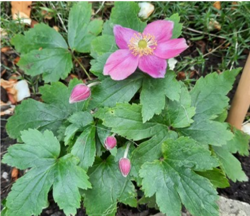
The flowers themselves are quite unique. While many people mistake their colorful parts for petals, most species actually lack true petals. Instead, they produce 4 to 27 sepals—leaf-like structures that take on vibrant colors to attract pollinators. These flowers can appear singly, in clusters called cymes, or in umbrella-like arrangements known as umbels.
Scientific Classification
The genus was formally named by Carl Linnaeus in 1753. While taxonomy is a constantly evolving field, modern molecular analysis has helped clarify the relationships within the genus. Historically, many related genera like Hepatica and Pulsatilla were sometimes grouped under Anemone, though they are often treated as distinct. Current research suggests the genus can be divided into two main subgenera: Anemonidium and Anemone.
Cultivation and Garden Varieties
Anemones are popular in horticulture, though their care requirements vary significantly depending on the species. They are generally categorized into three main groups based on their blooming cycles and root structures:
- Spring-flowering species: Often found in woodland or alpine settings, these typically have tuberous or rhizomatous roots (e.g., Anemonoides blanda).
- Spring and summer-flowering species: Often originating from hot, dry areas, these possess tuberous roots (e.g., Anemone coronaria).
- Summer and autumn-flowering species: These thrive in moist, dappled shade and have fibrous roots (e.g., Eriocapitella hupehensis).
Popular Species for Gardeners
One of the most recognized species is Anemone coronaria, often called the poppy anemone. It features large, poppy-like blossoms on stalks reaching 15–20 cm. While often sold as hybrids, they are available in striking colors like scarlet, crimson, and white. Another highly regarded group is the Japanese anemones, which include species like Eriocapitella hupehensis. These are particularly attractive to honeybees and bloom continually for several weeks in the autumn.
For those looking for low-growing woodland plants, Anemonoides nemorosa is a classic choice. When planting, most anemones prefer loamy, well-drained, and fertile soil. While some species like Anemone cylindrica can tolerate poor soil and drier conditions, most garden varieties benefit from being shielded from the harshest summer sun.
Summary of Anemone Types
| Group Type | Typical Bloom Season | Root Type | Example Species |
|---|---|---|---|
| Woodland/Alpine | Spring | Tuberous or Rhizomatous | Anemonoides blanda |
| Dry Area Species | Spring/Summer | Tuberous | Anemone coronaria |
| Shade Lovers | Summer/Autumn | Fibrous | Eriocapitella hupehensis |
Cultural Significance and Symbolism
The name "anemone" is steeped in mythology. One popular Greek legend suggests the flower was created by the goddess Aphrodite from the blood and tears shed for her lover, Adonis. This connection to the wind is reflected in the name, which refers to the delicate petals that are easily blown away by a breeze.
Symbolism varies widely across the globe:
- Victorian Era: Represented forsaken love, brevity, and expectation.
- Eastern Cultures: In some Chinese and Egyptian traditions, the flower's coloring has been associated with illness or bad luck.
- Art: The flowers have inspired famous works, such as Henri Matisse's 1937 painting Robe violette et Anémones.
Frequently Asked Questions
Are there truly blue anemones?
No, there are no truly blue anemones. In gardening marketing, the term "blue" is frequently used to describe flowers that are actually blue-violet.
What pests should I watch out for?
Anemone species can sometimes be targeted by cutworms, which are the larvae of certain noctuid moths, such as the angle shade or heart and dart moths.
When is the best time to plant Anemone coronaria?
In climate zones 7 or 8, they can be planted in the fall without extra protection. In cooler zones, they are best planted in the spring. Planting in the fall typically results in spring blooms, while spring planting leads to late summer flowers.
Do anemones need full sun?
It depends on the species. Larger species generally thrive in partial shade, though they can handle full sun if they are protected from the most intense heat in southern regions.
Why are they called windflowers?
The name refers to the perceived frailty of their petals, which can be easily moved or blown away by the wind.