Andrew Martin Darden: A Legacy of Virginia Politics and Education
Andrew Martin Darden was a pivotal figure in 20th-century Virginia, navigating a complex career that spanned the legislative halls of Congress, the executive office of the Governor, and the presidency of the University of Virginia. A long-time loyalist of the Byrd Organization—the powerful political machine led by Harry F. Byrd Sr. that dominated Virginia politics for decades—Darden's trajectory reflects the shifting social and political currents of the American South during the mid-1900s.
Early Legal Career and State Legislature
After being admitted to the Virginia bar, Darden established his legal practice in Norfolk, Virginia. His entry into politics began with his alignment with the Democratic party and the Byrd Organization. In 1929, he won his first election as one of four part-time representatives for Norfolk in the Virginia House of Delegates. He served in this capacity from 1930 to 1933, alongside colleagues Daniel Coleman, Vivian L. Page, and Wilson W. Vellines, before resigning to pursue a seat in the U.S. Congress.
Congressional Service and Political Shifts
Darden's tenure in the U.S. House of Representatives was marked by the strategic maneuvers of the Byrd Organization. In 1932, the organization shifted Virginia's congressional elections from district-based to an at-large method (where representatives are elected by the entire state rather than specific districts) to unseat Republican Menalcus Lankford. This strategy allowed Democrats to sweep all seats, including Darden's.
Darden served in the 73rd Congress as an at-large member and later represented the 2nd district in the 74th Congress from 1933 to 1937. After a brief hiatus following a 1936 primary defeat by Norman R. Hamilton, Darden returned to Congress for the 76th and 77th Congresses, serving from 1939 until 1941.
During his time in Washington, Darden's voting record aligned with his political affiliations. He supported the Dies Committee (the precursor to the House Un-American Activities Committee) and opposed federal anti-lynching legislation in 1940, despite supporting similar laws at the state level in Virginia. Notably, as early as 1939, he supported providing loans to European allies prior to the United States' formal entry into World War II.
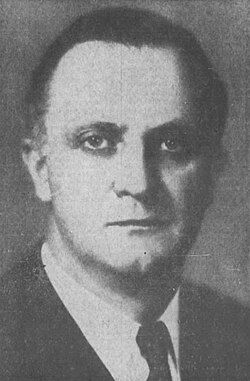
The Governorship of Virginia (1942–1946)
In 1941, Darden resigned from Congress to run for Governor, winning the election with 80.72% of the vote. His administration was defined by wartime management and fiscal conservatism. He reorganized the state's civil defense during World War II and focused heavily on the state's financial health, eliminating the state debt—a core tenet of the Byrd Organization.
Darden utilized the resulting budget surplus to fund public services, including the electrification of all Virginia educational institutions and investments in hospitals, colleges, and vocational schools. He also reformed the penal system and established a pension plan for teachers and state employees.
However, Darden's approach to race relations remained rooted in the segregationist values of his era. While he advocated for removing legislative barriers to Black citizens serving on juries and supported financial aid for Black students to attend Meharry Medical College in Tennessee (as Virginia medical schools remained white-only), he also upheld the firing of Black educators following the 1940 Alston v. School Board of Norfolk equal pay decision.
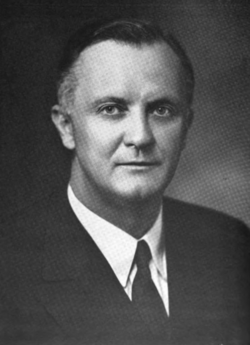
Presidency of the University of Virginia
In 1947, Darden transitioned from politics to academia as the president of the University of Virginia (UVA). His appointment was met with some resistance; faculty questioned his lack of academic experience, and students feared he would abolish fraternities based on his previous recommendations as Governor regarding the College of William and Mary.
While he did not ban fraternities at UVA, he did implement a ban on first-year rushing. His presidency saw significant infrastructure and academic growth, including the construction of Newcomb Hall (the student union) and the creation of the graduate school of business administration, which was later named in his honor. He also successfully pushed for increases in faculty salaries and established the Judiciary Committee to handle student misconduct.
Darden's views on integration evolved slowly. While he supported admitting African Americans to graduate and professional schools, he maintained a "separate but equal" philosophy for public schools. In 1950, he described segregated schools as acceptable if they were "first-rate." He testified in favor of segregation in Davis v. County School Board of Prince Edward County, a case that eventually reached the Supreme Court as part of the Brown v. Board of Education litigation. Despite these views, he presided over the admission of Gregory Swanson, the first Black student at the UVA School of Law, in 1950.
Later Years and International Service
Toward the end of his career, Darden distanced himself from the Byrd Organization's policy of "Massive Resistance" to integration. This shift in political alignment led President Dwight D. Eisenhower to appoint him as a U.S. delegate to the United Nations General Assembly in 1955.
Key Facts
- Political Affiliation: Long-time member of the Democratic party and the Byrd Organization.
- Congressional Tenure: Served in the 73rd, 74th, 76th, and 77th Congresses.
- Gubernatorial Achievements: Eliminated state debt, electrified educational institutions, and reformed the penal system.
- UVA Legacy: Established the graduate school of business administration and Newcomb Hall.
- Diplomatic Role: Served as a U.S. delegate to the UN General Assembly in 1955.
| Period/Year | Role | Key Outcome/Detail |
|---|---|---|
| 1930–1933 | Virginia House of Delegates | Represented Norfolk |
| 1932 | U.S. Representative (At-large) | Won with 8.24% of the vote in a 24-way race |
| 1934 | U.S. Representative (2nd District) | Re-elected with 76.14% of the vote |
| 1938 | U.S. Representative (2nd District) | Re-elected with 87.7% of the vote |
| 1942–1946 | Governor of Virginia | Elected with 80.72% of the vote |
| 1947–1955 | President of UVA | Expanded faculty pay and campus infrastructure |
| 1955 | UN Delegate | Appointed by President Eisenhower |
Frequently Asked Questions
What was the Byrd Organization?
The Byrd Organization was a powerful political machine in Virginia led by Harry F. Byrd Sr., characterized by fiscal conservatism, a limited electorate, and the maintenance of racial segregation.
How did Darden impact the University of Virginia?
Darden oversaw the creation of the graduate school of business administration, the construction of Newcomb Hall, the establishment of the student Judiciary Committee, and significant increases in faculty salaries.
What was Darden's stance on racial integration?
Darden generally supported the "separate but equal" doctrine. While he allowed integration in professional schools and supported some financial aid for Black medical students, he testified in favor of segregation in federal court and advocated for segregated public schools.
Why did Darden resign from Congress in 1941?
Darden resigned from his seat in the U.S. House of Representatives to run for the office of Governor of Virginia.
What was the "at-large" election method mentioned in his career?
An at-large election is one where representatives are chosen by the entire state population rather than by specific geographic districts. In 1932, this method was used in Virginia to help Democrats unseat a Republican representative.