Andrés Calamaro: The Versatile Icon of Argentine Rock
Andrés Calamaro is more than just a musician; he is a cornerstone of Spanish-language rock. Born on August 22, 1961, in Buenos Aires, Argentina, Calamaro has earned a reputation as one of the most influential and complete artists in the genre. His ability to seamlessly blend diverse styles—ranging from funk and reggae to tango, jazz, and boleros—has allowed him to transcend musical boundaries and sell over 1.3 million records.
A Latin Grammy winner and a master multi-instrumentalist, Calamaro's career is a testament to artistic evolution, moving from underground bands to international stardom and experimental digital distribution.
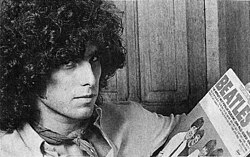
Key Facts
- Origin: Buenos Aires, Argentina.
- Musical Range: Expert in rock and roll, Latin rock, pop rock, funk, ska, reggae, tango, and new wave.
- Instruments: Proficient in piano, guitar, bass, drums, synthesizer, bandoneon, flute, violin, double bass, arpa, and vocals.
- Major Successes: Key member of Los Abuelos de la Nada and Los Rodríguez.
- Commercial Impact: Over 1.3 million records sold.
Early Career and Los Abuelos de la Nada
Calamaro's journey began at age 17 when he appeared as a guest on an album by the group Raíces. He soon formed the Elmer Band with guitarist Gringui Herrera, achieving an underground hit with "Tristeza de la Ciudad" (City Blues).
His trajectory shifted significantly when Miguel Abuelo, the leader of Los Abuelos de la Nada, invited him to join the band as a keyboardist. During this tenure, Calamaro emerged as a powerhouse songwriter, penning some of the band's most enduring hits, including "Sin gamulán," "Mil horas," and "Costumbres argentinas."
The First Solo Ventures and Production Work
Even before Los Abuelos de la Nada disbanded, Calamaro began exploring his solo identity. He released Hotel Calamaro in 1984, followed by Vida Cruel in 1985. While Vida Cruel was praised by critics, it struggled commercially.
By the late 1980s, Calamaro expanded his influence as a producer, working with prominent acts such as Los Fabulosos Cadillacs, Los Enanitos Verdes, and soloist Fabiana Cantilo. In 1989, he reunited with Gringui Herrera and Ariel Rot to record Nadie sale vivo de aquí, an album that earned a nomination for Best Record of the Year.
International Stardom with Los Rodríguez
Economic challenges in Argentina led Calamaro and Ariel Rot to relocate to Spain. There, they formed Los Rodríguez alongside Julián Infante and Germán Villela. The group became a phenomenon across Spain and Latin America during the 1990s.
The band released three highly successful studio albums: Buena Suerte (1991), Sin documentos (1993), and Palabras más, palabras menos (1995). Sin documentos, in particular, brought them international acclaim by fusing rock with flamenco and traditional Latin American rhythms.
Solo Evolution and Artistic Prolificacy
Following the dissolution of Los Rodríguez, Calamaro entered a period of intense creativity. In 1997, he released Alta suciedad, which sold over 500,000 copies. This was followed by the double album Honestidad brutal, a project born from a personal breakup that featured 37 songs and a collaboration with football legend Diego Maradona.
His productivity peaked in 2000 with the release of El Salmón, a massive five-CD collection containing 103 songs. This era highlighted his commitment to the art of songwriting over commercial constraints.
Digital Innovation and the Return to Rock
Calamaro was an early adopter of the internet for music distribution. Between 2001 and 2002, he offered unpublished songs for free download, asserting that "Music belongs to those who want to hear it." He also launched Radio Salmón Vaticano, a virtual recording studio on his website.
In the mid-2000s, he explored his roots with El Cantante (2004) and Tinta Roja (2006), both focusing on tangos and Latin rhythms. He later returned to his rock foundations with the 2010 album On The Rock, which featured the hit single "Los Divinos."
Career Summary
| Period/Group | Key Works/Albums | Notable Style/Achievement |
|---|---|---|
| Los Abuelos de la Nada | "Mil horas", "Sin gamulán" | Breakthrough as a songwriter |
| Los Rodríguez | Sin documentos | International fame; Rock-Flamenco fusion |
| Solo (Late 90s) | Alta suciedad, Honestidad brutal | Commercial peak and personal introspection |
| Solo (2000s) | El Salmón, Tinta Roja | Prolific output and Tango exploration |
| Solo (2010+) | On The Rock | Return to rock-oriented sound |
Frequently Asked Questions
Which bands was Andrés Calamaro a member of?
Calamaro was a key member of Los Abuelos de la Nada in Argentina and later formed the internationally successful band Los Rodríguez in Spain.
What instruments can Andrés Calamaro play?
He is a multi-instrumentalist proficient in piano, guitar, bass guitar, drums, synthesizer, bandoneon, flute, violin, double bass, and arpa, in addition to being a vocalist.
What is the significance of the album 'Sin documentos'?
Released by Los Rodríguez in 1993, this album brought the band international acclaim due to its unique blend of rock, flamenco, and Latin American rhythms.
How did Calamaro approach music distribution in the early 2000s?
He embraced the internet by offering unpublished songs and home recordings for free download, believing that music should belong to the listeners.
Which album featured a collaboration with Diego Maradona?
The double album Honestidad brutal includes a collaboration with the legendary Argentine footballer Diego Maradona.