Ancestry: The Evolution of Global Genealogy and Genetic Testing
From humble beginnings selling data on floppy disks from the back of a car, Ancestry has grown into the world's largest provider of consumer DNA testing and a titan of historical record preservation. By blending traditional genealogical research with cutting-edge genetic science, the company has transformed how millions of people discover their heritage and connect with their ancestors.
As of 2022, the company reported providing access to a staggering 30 billion historical records—a threefold increase from its 2018 count of 10 billion. With a global network of over 25 million users and DNA testing available in 128 countries, Ancestry serves as a primary gateway for those seeking to map their family trees and understand their biological origins.
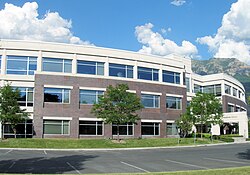
Key Facts
- Founded: 1996 by Paul Brent Allen and Dan Taggart.
- Current Ownership: GIC Private Limited and The Blackstone Group.
- Scale: Access to 30 billion historical records (as of 2022).
- DNA Reach: Over 25 million users worldwide across 128 countries.
- Revenue: US$1 billion in 2022.
- Workforce: Approximately 1,400 employees.
The Journey from Infobases to a Global Powerhouse
Early Foundations (1983–1999)
The roots of the company trace back to Infobases, where founders Paul Brent Allen and Dan Taggart initially sold products on floppy and compact discs. In April 1995, they released the LDS Collectors Edition on CD for $299.95, followed by an online version in August. The official launch of Ancestry.com occurred in 1996.
The late 1990s were a period of rapid expansion and rebranding. In December 1998, the company launched MyFamily.com, which attracted one million registered users within 140 days. By November 17, 1999, the parent company changed its name to MyFamily.com, Inc., managing a portfolio that included Ancestry.com, FamilyHistory.com, and MyFamily.com.
Public Listing and Private Equity (2000–2019)
The company continued to scale its operations, opening a large call center in Provo, Utah, in 2004 to support its growing user base. On November 5, 2009, Ancestry.com went public on the NASDAQ under the symbol ACOM, with an initial public offering of 7.4 million shares.
In October 2012, the company transitioned back to private ownership after being acquired by a private equity group—including Permira Advisers LLP and Spectrum Equity—for approximately $1.6 billion. This era was marked by strategic acquisitions to broaden its data offerings, including the purchase of 1000Memories for photo digitization and the acquisition of Find a Grave in 2013.
Modern Era and The Blackstone Acquisition (2020–Present)
In December 2020, The Blackstone Group completed the acquisition of Ancestry for $4.7 billion. Under this ownership, the company has continued to expand its archival reach. A notable recent achievement is a 2023 contract to digitize over 3 million British Army service records, scheduled for release between 2024 and 2029.
The Ecosystem of Ancestry Products
Ancestry operates a diverse suite of services that cater to different aspects of family history research, from genetic markers to digitized newspapers.
AncestryDNA
AncestryDNA is a direct-to-consumer genetic genealogy service. By analyzing DNA sequences, the service infers "ancestral regions" (formerly ethnicity estimates) and identifies potential family relationships between users. While it previously offered Y-chromosome and mitochondrial DNA tests, these were discontinued in 2014 to focus on autosomal testing.
Specialized Research Platforms
- Find a Grave: A massive database of cemetery records and burial information, acquired in 2013.
- Newspapers.com: Spun off in 2012, this service provides searchable archives of over 25,000 newspapers from ten different countries.
- Archives.com: Acquired for $100 million in 2012, specializing in vital records and census data.
- Fold3 and Forces War Records: These platforms focus on military genealogy. Forces War Records, acquired in 2021, provides specialized British military records, integrating the architecture of Fold3 to offer a premium experience for UK researchers.
The company also manages other niche services such as Know Your Pet DNA and RootsWeb, though the latter has transitioned to a read-only format for hosted websites as of 2024.
| Category | Details |
|---|---|
| Industry | Genealogy, Genetic Genealogy, Software & Online Publishing |
| Key Products | Ancestry.com, AncestryDNA, Find a Grave, Newspapers.com, Fold3 |
| Historical Records | 30 Billion (as of 2022) |
| DNA User Base | 25 Million+ |
| Current CEO | Howard Hochhauser |
Privacy and Ethics in Genetic Testing
As DNA testing became more prevalent, Ancestry addressed the intersection of genealogy and law enforcement. In December 2018, following the use of GEDmatch to identify the Golden State Killer, Ancestry announced a strict data policy. The company stated that DNA profiles would not be used for crime-solving without a valid legal process, such as a search warrant, to protect user privacy.
Frequently Asked Questions
Who currently owns Ancestry?
Ancestry is owned by GIC Private Limited and The Blackstone Group, following a $4.7 billion acquisition completed in December 2020.
How many historical records does Ancestry provide?
As of 2022, the company reported providing access to 30 billion historical records.
What is the difference between Fold3 and Forces War Records?
While both focus on military genealogy, Fold3 was historically viewed as US-centric. Forces War Records is a British military specialist website that uses similar architecture to Fold3 to provide UK-specific service records and source documents.
Does Ancestry allow police to access DNA data?
Ancestry maintains a policy that DNA profiles cannot be used for law enforcement purposes without a valid legal process, such as a search warrant, to ensure user privacy.
What is the purpose of AncestryDNA?
AncestryDNA is a direct-to-consumer test that uses DNA sequences to help users infer their ancestral regions and find family relationships with other users in the database.