Anatolian Hieroglyphs: The Ancient Script of the Luwians
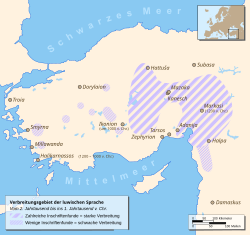
Deep in the heart of central Anatolia, an ancient writing system once flourished, carving the history of a forgotten people into stone and bronze. Anatolian hieroglyphs are an indigenous logographic script—a system where signs represent both words and sounds—that served as a primary means of communication from the 14th to the 7th centuries BC.
While these characters were historically referred to as Hittite hieroglyphs, modern linguistic research has revealed that the language they actually encode is Luwian. Although they share a visual similarity with Egyptian hieroglyphs, they developed independently and did not serve the same sacred function as their Egyptian counterparts. Furthermore, there is no demonstrable connection between this script and the Hittite cuneiform used in the same region.
Key Facts
- Language: Primarily used to write the Luwian language.
- Time Period: Active from the 14th century BC until the early 7th century BC.
- Composition: Consists of approximately 500 unique signs.
- Script Type: A mix of logograms (word-signs) and syllabograms (sound-signs).
- Direction: Written from left to right.
- Unicode Range: U+14400–U+1467F.
History and Evolution
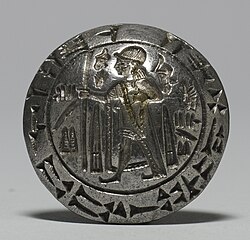
The earliest evidence of Anatolian hieroglyphs appears on personal seals from the second and early first millennia BC, found across Anatolia and into modern-day Syria. One notable example is a biconvex bronze seal from the Troy VIIb level, dating to the latter half of the 12th century BC. These early seals often featured names, titles, and auspicious symbols, though it is debated whether they represented a fully developed language at that stage.
The script's usage followed a fluctuating timeline. Confirmed inscriptions date back to the Late Bronze Age (14th–13th centuries BC), followed by a period of sparse material. The script saw a resurgence during the Early Iron Age (10th–8th centuries BC). However, by the early 7th century BC, the system was marginalized by the rise of more efficient alphabetic scripts and eventually fell into oblivion.
While most surviving texts are monumental stone inscriptions, some documents have been found on lead strips. Scholars believe that during the Neo-Hittite period, the script was likely used for everyday administration on perishable materials that have since decayed.
Linguistic Characteristics
The script is predominantly Luwian, but its origins suggest a bilingual Hittite-Luwian environment. A telling example is the sign for a "grasping hand," which carries the value /ta/—the Hittite word for "to take"—whereas the Luwian equivalent is /la/.
The system is typologically complex, employing three types of signs:
- Logograms: Signs that represent an entire word (e.g., a foot sign representing "foot").
- Syllabograms: Signs representing consonant-vowel (CV) syllables.
- Determinatives: Signs that provide context for the word they accompany.
In rare instances, the script was used to record foreign materials, such as Hurrian deities or measurement units in Urartian.
The Path to Decipherment
Western scholars first encountered these inscriptions in the 19th century through explorers like Johann Ludwig Burckhardt and Richard Francis Burton in Hama, Syria. For decades, the script remained a mystery, though A.H. Sayce correctly presumed its Anatolian origin.
Real progress began around 1915 as the Luwian language became known through cuneiform texts. During the 1930s, a team including Ignace Gelb, Piero Meriggi, Emil Forrer, and Bedřich Hrozný achieved a partial decipherment. The final confirmation that the language was Luwian came in 1973, thanks to the work of J.D. Hawkins, Anna Morpurgo Davies, and Günther Neumann, who corrected critical sign values.
Technical Summary of the Script
| Feature | Description |
|---|---|
| Sign Count | ~500 unique signs |
| Phonetic Structure | Primarily CV (Consonant-Vowel) syllables |
| Primary Material | Stone (monuments), Bronze (seals), Lead (strips) |
| Transliteration | Logograms in Latin capitals (e.g., PES); Syllabograms in lowercase |
| Modern Standard | Unicode 8.0 (2015) |
Frequently Asked Questions
Are Anatolian hieroglyphs the same as Egyptian hieroglyphs?
No. While they look similar and both use logographic and phonographic elements, they are graphically independent and developed in different cultures. They also lacked the specific sacred role that Egyptian hieroglyphs held.
What language is written in Anatolian hieroglyphs?
The vast majority of the texts are written in the Luwian language, although there are some influences and loanwords from Hittite, Hurrian, and Urartian.
How was the script finally deciphered?
Decipherment was a multi-stage process. It began with 19th-century discoveries, progressed through the 1930s with partial readings, and was fully confirmed as Luwian in 1973 by J.D. Hawkins and his colleagues.
What is a logogram in this script?
A logogram is a sign that represents a whole word rather than a sound. For example, the sign for a foot is transcribed as PES when used as a logogram, but can also function as a syllabogram with the sound /ti/.
Why did the script disappear?
By the early 7th century BC, the script was replaced by competing alphabetic systems, which were simpler to learn and write, leading the hieroglyphic system to fall into oblivion.