American Antiquarian Society: Preserving the Printed Legacy of Early America
The American Antiquarian Society (AAS) is a premier learned society and national research library dedicated to the study of pre-twentieth-century American history and culture. Located in Worcester, Massachusetts, it holds the distinction of being the oldest historical society in the United States with a national focus. Since its inception, the AAS has served as a critical repository for the printed records of the United States, spanning from the first European settlements through the year 1900.
The society's mission is to collect, preserve, and provide access to the diverse array of printed materials that document the evolution of the American experience. This commitment extends to a wide audience, offering specialized programs in fields such as Indigenous Peoples Studies, Environmental History, and American Religion for scholars, students, educators, and the general public.
Key Facts
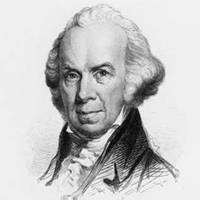
- Founded: 1812 by Isaiah Thomas.
- Location: 185 Salisbury Street, Worcester, Massachusetts.
- Collection Size: Approximately 4.5 million items.
- Scope: Printed records from the first European settlement through 1900.
- Status: U.S. National Historic Landmark and listed on the National Register of Historic Places.
- Notable Holding: A copy of the Bay Psalm Book, the first book printed in America.
The Vast Collections of the AAS
The AAS repository is an immense archive containing over four million books, pamphlets, newspapers, periodicals, manuscripts, and graphic arts materials. Its reach is geographically broad, encompassing historic materials from all fifty U.S. states, as well as significant records from Canada and the British West Indies.
The society is estimated to hold two-thirds of all books known to have been printed in the United States between the establishment of the first press in 1640 and the year 1820. Many of these volumes are unique or exceedingly rare. Furthermore, the AAS maintains one of the largest collections of American newspapers printed through 1876, totaling more than two million issues.
Diverse Historical Artifacts
Beyond traditional books and newspapers, the AAS preserves a eclectic range of cultural artifacts, including:
- The Humming Bird, or Herald of Taste: The first American women's magazine edited by a woman.
- Music and Games: Over 60,000 pieces of sheet music and more than 300 games, including cards, puzzles, and board games.
- Personal Records: Extensive New England diaries and personal papers.
- Visuals and Literature: A diverse photograph collection (1830s–1920s) and children's literature dating back to the 1650s.
- Material Culture: A large historical pottery collection.
History and Architecture
The society was established on October 24, 1812, through an act of the Massachusetts General Court. Founder Isaiah Thomas initiated the collection with 8,000 volumes from his own personal library. Over the next two centuries, the society grew and relocated several times to accommodate its expanding archives.
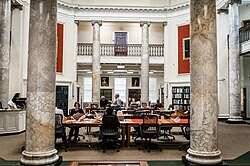
The current main building, Antiquarian Hall, was completed in 1910. Designed by the architectural firm Winslow, Bigelow & Wadsworth, the building is a prime example of the Colonial Revival (or Georgian Revival) style. Spanning 1.8 acres, the site was designated as a U.S. National Historic Landmark and added to the National Register of Historic Places on November 24, 1968.
To keep pace with modern research needs, the facility has undergone several expansions. A 2019 addition introduced a multi-use learning lab, a conservation lab, and an updated HVAC system to ensure the longevity of the delicate materials.
Printing Technology and Preservation
Given Isaiah Thomas's background as a newspaper publisher, the AAS places a strong academic emphasis on printing technology—the mechanical process of reproducing text and images. The society specifically focuses on 18th-century British North America, tracking the evolution of paper-making from hand-woven cloth to industrial pulp in the late 1700s.
To protect these fragile records, the AAS operates an on-site conservation department. This facility utilizes specialized sewing, cloth, and binding materials to restore and preserve rare printed works for future generations.
Institutional Overview
| Category | Details |
|---|---|
| Established | 1812 |
| Current Director | Scott E. Casper |
| Membership (2024) | 1,211 members |
| Staff | 45 employees |
| Major Award | 2013 National Humanities Medal |
| Architectural Style | Colonial Revival |
Frequently Asked Questions
What is the primary mission of the American Antiquarian Society?
The mission of the AAS is to collect, preserve, and make available for study all printed records of the United States from the first European settlement through the year 1900.
Who founded the society and how did it start?
The society was founded by Isaiah Thomas on October 24, 1812. He began the collection using approximately 8,000 books from his own personal library.
What makes the AAS collection unique?
The AAS is estimated to hold two-thirds of all books known to have been printed in the U.S. between 1640 and 1820, including a copy of the Bay Psalm Book, the first book printed in America.
Is the American Antiquarian Society open to the public?
Yes, the AAS offers programs, lectures, and seminars for a wide range of people, including professional scholars, students, educators, genealogists, and the general public.
What is the significance of Antiquarian Hall?
Antiquarian Hall is the society's main building, completed in 1910. It is recognized as a U.S. National Historic Landmark due to its architectural significance and its role in housing one of the nation's most important historical collections.