American Academy of Arts and Sciences: A Legacy of Intellectual Excellence
The American Academy of Arts and Sciences (often referred to as The Academy) stands as one of the oldest and most prestigious learned societies in the United States. Founded during the crucible of the American Revolution, it serves as both an honorary society and an independent research center dedicated to the advancement of knowledge across a vast array of disciplines.
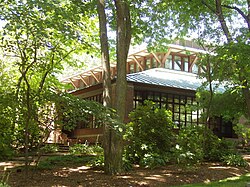
Headquartered in Cambridge, Massachusetts, the Academy brings together some of the world's most accomplished scholars, artists, and leaders to address complex challenges and cultivate the arts and sciences for the benefit of a free and virtuous society.
Key Facts
- Founded: May 4, 1780, by Founding Fathers including John Adams and John Hancock.
- Membership: Over 5,700 active members, including more than 250 Nobel laureates and 60 Pulitzer Prize winners.
- Leadership: Led by President Laurie L. Patton (as of January 2025).
- Key Publication: Dædalus, a multidisciplinary journal that has been open-access since January 2021.
- Focus: Multidisciplinary public policy research and the promotion of humanities and sciences.
A History of Intellectual Leadership
The Academy was established by the Massachusetts legislature in 1780 with a mandate to cultivate every art and science that could advance the interest, honor, and happiness of the people. Its initial 62 incorporating fellows were prominent figures from the political, professional, and commercial sectors. By 1781, the membership expanded to include legendary figures such as George Washington and Benjamin Franklin.
Over the centuries, the Academy has evolved its focus. While it began with the publication of Academy Memoirs in 1785 and Proceedings in 1846, the 1950s marked a shift toward a more socially oriented program with the launch of the journal Daedalus. In the latter half of the 20th century, the Academy pivoted toward independent research, specifically focusing on arms control in the late 1950s.
By the late 1990s, the Academy adopted a strategic plan centering on four pillars: science, technology, and global security; social policy and education; humanities and culture; and general education. This commitment to academic growth led to the creation of a visiting scholars program in 2002 in association with Harvard University, supported by over 75 affiliate academic institutions.
Membership and Academic Influence
Membership in the Academy is a high honor, achieved through a rigorous process of nominating petitions, reviews, and elections. The membership is diverse, encompassing scientists, scholars, writers, artists, and public leaders. To date, more than 10,000 fellows have been elected.
The Academy's reach is global, including international honorary members such as Albert Einstein, Charles Darwin, and Pablo Picasso. Notably, astronomer Maria Mitchell became the first woman elected to the Academy in 1848.
Institutional Affiliations
The Academy maintains strong ties with leading research universities. A significant portion of its historical membership has been affiliated with the following institutions:
| Institution | Number of Members |
|---|---|
| Harvard | 1,406 |
| MIT | 611 |
| Yale | 433 |
| UC Berkeley | 425 |
| Stanford | 404 |
| Chicago | 367 |
| Columbia | 344 |
| Princeton | 322 |
Academic Classification
As of 2023, the Academy organizes its membership into five distinct classes and thirty specialties to maintain multidisciplinary rigor:
- Class I: Mathematical and Physical Sciences (e.g., Physics, Chemistry, Computer Sciences)
- Class II: Biological Sciences (e.g., Neurosciences, Medical Sciences, Ecology)
- Class III: Social and Behavioral Sciences (e.g., Economics, Law, Sociology)
- Class IV: Arts and Humanities (e.g., Philosophy, Visual Arts, Religious Studies)
- Class V: Public Affairs, Business, and Administration (e.g., Journalism, Public Policy, Nonprofit Leadership)
Major Projects and Initiatives
One of the Academy's most significant modern contributions is The Humanities Indicators. This project provides researchers, policymakers, and public institutions with statistical tools to analyze the state of humanities education and the humanities workforce. It is modeled after the Science and Engineering Indicators published by the National Science Board, aiming to bring a data-driven approach to the understanding of the humanities' impact on society.
Frequently Asked Questions
Who founded the American Academy of Arts and Sciences?
The Academy was founded on May 4, 1780, by several Founding Fathers of the United States, including John Adams, John Hancock, James Bowdoin, and Andrew Oliver.
How does one become a member of the Academy?
Membership is not applied for; instead, it is achieved through a formal process involving a nominating petition, a thorough review, and an election by existing peers.
What is Dædalus?
Dædalus is the Academy's quarterly journal, published by the MIT Press. It focuses on multidisciplinary intellectual and social programs and has been open-access since January 2021.
Who is the current president of the Academy?
Laurie L. Patton has served as the President of the American Academy of Arts and Sciences since January 2025.
What are the Humanities Indicators?
The Humanities Indicators is a project that provides statistical data and tools to help institutions and policymakers understand trends in humanities education, funding, and workforce impact.