Amateur Radio: The Early History of Wireless Telegraphy
Long before the modern era of instant digital communication, a wave of curiosity and technical ingenuity sparked the birth of amateur radio. This movement grew from the transition of theoretical physics into practical communication, as early experimenters sought to master the invisible forces of the air to send messages across distances without the need for physical wires.
The Scientific Foundations of Wireless Communication
The journey began in 1888 when Heinrich Rudolf Hertz proved the existence of radio waves. By the 1890s, Italian inventor Guglielmo Marconi adapted these waves into a functional communication system. This breakthrough transformed the landscape of messaging, drawing inspiration from the amateur wired telegraphers of the late 19th century who had already established their own interconnected telegraphic networks.
In these early days, the technology was known as wireless telegraphy; the term "radio" would not become common parlance for several years. Because technical information was scarce, hobbyists relied on niche publications. For example, the November 1901 issue of Amateur Work provided instructions on building simple systems based on Hertz's original experiments.
The Rise of the Amateur Hobbyist
As the potential of wireless telegraphy became clear, a spirit of experimentation took hold. This era saw remarkable achievements from young enthusiasts. In 1904, two 8th graders from Boston, Massachusetts, successfully constructed a transmitter and receiver capable of reaching eight miles. By 1906, two teenagers in Rhode Island had established their own wireless station inside a chicken coop.
The accessibility of the hobby increased in 1905 when the first commercially produced wireless telegraphy transmitter and receiver systems became available to the public in the United States. This democratization of technology led to the formation of organized groups. In 1908, students at Columbia University founded the Wireless Telegraph Club of Columbia University (now the Columbia University Amateur Radio Club), the earliest recorded amateur radio club. Similarly, the Amateurs of Australia formed in 1910, an organization now known as the Wireless Institute of Australia.
Regulation and the Impact of the Titanic
By 1910, the rapid expansion of the hobby—described by some as a "mania"—created significant challenges. Thousands of transmitters were in operation, many using crude spark-transmitters. These devices spread signals across a wide portion of the radio spectrum, causing inadvertent or malicious interference with critical military and commercial radio systems.
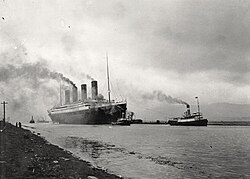
The sinking of the RMS Titanic served as a catalyst for government intervention. In response, the United States Congress passed the Radio Act of 1912. This legislation introduced federal licensing for amateur operators and stations and restricted private stations to wavelengths of 200 meters or shorter (1500 kHz or higher). At the time, these short wave frequencies were widely considered useless, and it is estimated that the number of U.S. radio hobbyists dropped by as much as 88%.
Global standards followed this trend. By 1913, the International Convention for the Safety of Life at Sea established a treaty requiring shipboard radio stations to be staffed 24 hours a day to ensure maritime safety.
Key Facts
- Origin: Based on radio waves proved by Heinrich Rudolf Hertz (1888) and adapted by Guglielmo Marconi (1890s).
- First Club: The Wireless Telegraph Club of Columbia University (1908) is the earliest recorded amateur radio club.
- Regulatory Shift: The Radio Act of 1912 introduced federal licensing and restricted amateurs to wavelengths of 200 meters or shorter.
- Impact: The 1912 restrictions led to an estimated 88% decline in U.S. radio hobbyists.
- Terminology: The term "ham" originated as a taunt from professional telegraphers toward amateurs.
| Year | Event / Milestone |
|---|---|
| 1888 | Heinrich Rudolf Hertz proves the existence of radio waves. |
| 1890s | Guglielmo Marconi adapts radio waves into a communication system. |
| 1905 | First commercial wireless transmitter/receiver systems available to amateurs in the US. |
| 1908 | Formation of the Wireless Telegraph Club of Columbia University. |
| 1910 | Formation of the Amateurs of Australia. |
| 1912 | Passage of the Radio Act of 1912 in the United States. |
| 1913 | International Convention for the Safety of Life at Sea treaty produced. |
Frequently Asked Questions
Who is credited with starting wireless telegraphy?
While Heinrich Rudolf Hertz proved the existence of radio waves in 1888, it was the Italian inventor Guglielmo Marconi who adapted them into a practical communication system in the 1890s.
Why was the Radio Act of 1912 passed?
The act was passed following the sinking of the RMS Titanic to address widespread radio interference caused by amateur spark-transmitters and to better regulate commercial and military communications.
What happened to amateur radio after the 1912 Act?
Amateurs were restricted to "short wave" frequencies (200 meters or shorter), which were thought to be useless at the time. This caused the number of hobbyists in the U.S. to drop by an estimated 88%.
Where does the term "ham" come from?
The term "ham" was originally used as a taunt by professional telegraphers to describe amateur radio operators.
What was the first amateur radio club?
The earliest recorded formation of an amateur radio club was the Wireless Telegraph Club of Columbia University, established in 1908.