Algebra: From Elementary Equations to Abstract Structures
Algebra is a fundamental branch of mathematics that extends the basic principles of arithmetic into a more powerful and flexible system. While arithmetic focuses on specific numbers, algebra introduces variables—symbols used to represent unspecified values—allowing mathematicians to describe general relationships and solve for unknown quantities.
At its core, algebra deals with abstract systems known as algebraic structures and the manipulation of expressions within those systems. By generalizing arithmetic, it introduces operations beyond simple addition and multiplication, providing the tools necessary for everything from basic school mathematics to advanced theoretical physics.

Key Facts
- Etymology: The term "algebra" originates from the title of the book Al-Jabr by the mathematician al-Khwarizmi.
- Core Purpose: It seeks to determine the values that make mathematical statements true by transforming equations to isolate variables.
- Scope: It ranges from elementary school algebra to complex abstract structures like groups, rings, and fields.
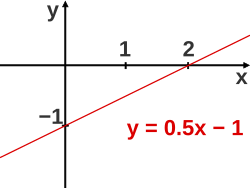
- Geometric Link: Algebraic equations can be visualized geometrically, such as linear equations appearing as lines on a graph.
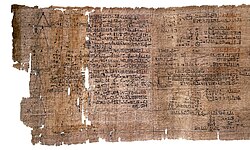
- Historical Roots: Early algebraic problems are documented in ancient texts, including the Rhind Mathematical Papyrus (c. 1650 BCE).
Major Branches of Algebra
Elementary Algebra
Elementary algebra is the primary form of the subject taught in schools. It focuses on the study of equations formed using arithmetical operations. The goal is to find the specific values for variables that solve these equations, typically by using methods to isolate the variable on one side of the equation.
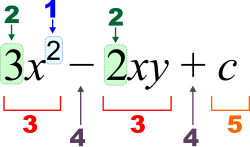
Within this branch, polynomials play a central role, serving as the building blocks for more complex algebraic expressions.
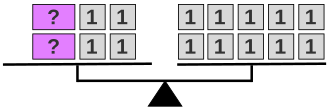
Linear Algebra
Linear algebra is a specialized field that investigates linear equations and systems of linear equations (combinations of multiple linear equations). It provides the mathematical framework to find values that solve all equations in a system simultaneously.
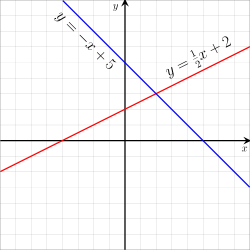
Geometrically, a linear equation with two variables is represented as a line. When multiple lines are plotted, the solution to the system is the point where those lines intersect.
Abstract Algebra
Abstract algebra moves away from specific numbers to study algebraic structures themselves. These structures are often defined by binary operations—rules that take two objects as input and combine them into a single output, similar to how addition works.

Key structures within abstract algebra include:
- Group Theory: The study of groups, which are sets equipped with a single operation. A practical example is the Rubik's Cube group, where rotations of the cube's faces form permutations.
- Ring and Field Theory: These study more complex structures that typically involve two binary operations (usually addition and multiplication).
- Universal Algebra: A field that examines the commonalities between different algebraic structures. Garrett Birkhoff was a pioneer in developing the foundational concepts of this area.

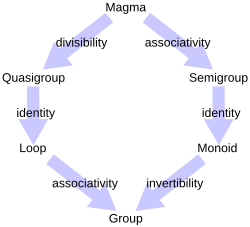
Algebraic Applications and Geometry
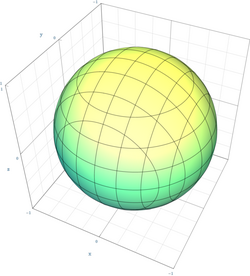
Algebra is not merely a theoretical exercise; it is deeply intertwined with geometry. Algebraic equations can describe geometric figures; for example, a specific equation can describe a sphere at the origin with a radius of 1.
Other specialized applications include:
- Algebraic Geometry: The study of the relationship between algebraic equations and geometric shapes.
- Algebraic Topology: Using algebraic tools to study topological spaces.
- Computer Algebra: The intersection of computer science and mathematics, focusing on the symbolic manipulation of mathematical expressions.
Summary of Algebraic Structures
| Structure | Primary Focus | Example/Application |
|---|---|---|
| Elementary Algebra | Solving for unknown variables | School-level equations |
| Linear Algebra | Linear equations and systems | Vector spaces, intersections of lines |
| Group Theory | Symmetry and permutations | Rubik's Cube rotations |
| Universal Algebra | General properties of structures | Birkhoff's Theorem |
History of Algebra
The evolution of algebra spans millennia. Early evidence of algebraic problem-solving is found in ancient Egypt and Babylon, notably in the Rhind Mathematical Papyrus. Later, the field was formalized by mathematicians like al-Khwarizmi, whose work gave the discipline its name.

Over time, the field expanded from the search for numerical solutions to the study of formal equations and eventually to the structural approach of modern abstract algebra, influenced by figures such as Emmy Noether and Emil Artin.

Frequently Asked Questions
What is the difference between arithmetic and algebra?
Arithmetic deals with specific numbers and basic calculations. Algebra generalizes these concepts by introducing variables, allowing for the description of general patterns and the solving of equations where values are unknown.
What is a binary operation?
A binary operation is a rule that takes two elements from a set and combines them to produce a single element as an output. Common examples include addition and multiplication.
How is linear algebra used geometrically?
In linear algebra, equations with two variables are interpreted as lines on a coordinate plane. The solution to a system of such equations is the point where these lines intersect.
What is the purpose of abstract algebra?
Abstract algebra studies the underlying rules and structures (like groups, rings, and fields) that govern mathematical systems, rather than focusing on the specific numbers within those systems.
Where does the word "algebra" come from?
The word comes from the Arabic term Al-Jabr, which was the title of a seminal book written by the mathematician al-Khwarizmi.