Alfajores: The History and Varieties of the Traditional Spanish and Latin American Sweet
The alfajor (or alajú) is a beloved traditional confection with a rich history that spans continents. While today it is most closely associated with the vibrant dessert cultures of South America, its roots lie in the Iberian Peninsula. From its origins as a luxurious Arabic-inspired treat to its modern evolution into a mass-produced snack, the alfajor represents a fascinating blend of cultural influences.
Originally born in Iberia during the rule of al-Andalus, this sweet has traveled from Spain to the Philippines and across Latin America, including Argentina, Bolivia, Brazil, Chile, Colombia, the Dominican Republic, Ecuador, El Salvador, Paraguay, Peru, Uruguay, and Venezuela. Depending on where you find it, an alfajor can range from a spiced honey cylinder to a delicate sandwich cookie filled with creamy caramel.
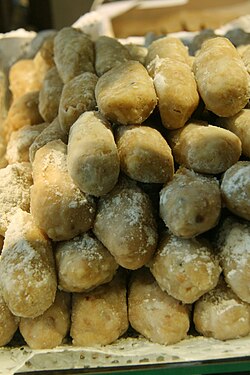
Key Facts
- Origin: Created in Spain during the Moorish period (al-Andalus).
- Etymology: Derived from the Arabic al-fakhir, meaning "luxurious."
- Core Ingredients: Traditionally flour, honey, and nuts; modern versions use dulce de leche.
- Global Reach: Popular across Spain, the Philippines, and most of Latin America.
- Consumption Peak: Argentina is one of the world's largest consumers, eating over a billion per year.
Etymology and Historical Origins
The word alfajor is an Andalusian variant of the Castilian alajú. According to philologist Manuel Alvar López, it stems from the Arabic word al-fakhir, meaning "luxurious." Some historical records, such as those by Raimundo Martin in the 12th century, suggest another possible root in the Hispano-Arabic fasur, meaning "nectar."
The sweet was well-established in Spain long before it reached the Americas; the term appeared in Spanish dictionaries as early as the 14th century and was noted by the grammarian Nebrija in 1495. While the original alajur was a paste made of almonds, nuts, breadcrumbs, and honey, the version known as the alfajor became particularly prominent in Andalusia and Murcia before being introduced to Latin America in the 19th century.
The Traditional Spanish Alfajor
In Spain, alfajores are often associated with the Christmas season. The most traditional recipes utilize flour, honey, almonds, and spices like cinnamon. In the town of Medina-Sidonia, the sweet is known as alajú and has been produced using ancestral recipes for centuries.
The Alfajor de Medina Sidonia is so culturally significant that it received a protected geographical indication in 2007. According to strict regulations, these must be cylindrical, at least 7 centimeters long, and made using only pure honey, almonds, nuts, breadcrumbs, sugar, flour, and specific spices such as aniseed, sesame, cilantro, cloves, and cinnamon. They are traditionally wrapped in paper with spiral ornaments and packaged in wood or cardboard boxes.
Alfajores in South America
In South America, the alfajor evolved into a sandwich-style cookie. In Argentina, Peru, Uruguay, and Venezuela, it typically consists of two round biscuits made from wheat or corn flour joined by dulce de leche (called manjar blanco in Peru and arequipe in Venezuela). These are often dusted with powdered sugar or coated in dark or white chocolate.
Argentina: A National Passion
Argentina is a global leader in alfajor consumption, with citizens eating approximately 6 million per day. While many are mass-produced by brands like Havanna and Balcarce, several regional varieties exist:
- Alfajor Santafesino: A heritage treat from Santa Fe featuring three layers of puff pastry and a sugar glaze. It gained fame in 1851 after being taken to the Battle of Caseros.
- Cordobés: Filled with fruit jellies, typically quince.
- Rogel: A larger version similar to the Santa Fe variety, resembling a small cake.
- Clarita: A Tucuman variety featuring crunchy cookies and sugar molasses jelly.

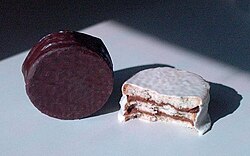
Chilean and Peruvian Variations
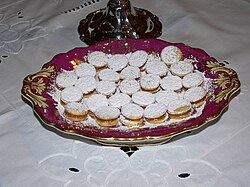
In Chile, two distinct types exist. The chilenitos are small corn flour cookies common in the central region. In the south, the traditional "Chilean alfajor" uses hojarascas (thin, firm, curved cookies) joined with dark brown sugar, panela, or manjar.
In Peru, alfajores arrived in the 16th century. A notable regional specialty is the Alfajor de Trujillo, which can be round or square and features layers of flour, butter, eggs, and milk, filled with milk candy, pineapple sweets, or peanuts. A related variant is the King Kong milk candy.
Summary of Regional Alfajor Types
| Region | Common Name | Primary Filling/Ingredients | Distinctive Feature |
|---|---|---|---|
| Spain (Andalusia) | Alajú / Alfajor | Honey, almonds, hazelnuts, spices | Cylindrical shape, honey-based paste |
| Argentina | Alfajor | Dulce de leche, corn/wheat flour | Massive consumption; chocolate or sugar coating |
| Argentina (Santa Fe) | Santafesino | Dulce de leche, puff pastry | Three layers with a sugar glaze |
| Chile (South) | Chilean Alfajor | Panela, manjar, or brown sugar | Uses curved hojarascas cookies |
| Peru (Trujillo) | Alfajor de Trujillo | Milk candy, pineapple, peanuts | Multi-layered; can be square or round |
Frequently Asked Questions
What is the difference between an alfajor and an alajú?
Linguistically, they are variants of the same word. In Spain, alajú is more common in Castilian regions like Cuenca and Toledo, while alfajor is the Andalusian and Murcian term. Both refer to the traditional honey and nut paste confection.
What is dulce de leche?
Dulce de leche is a thick, creamy caramel-like sauce made by slowly heating sweetened milk. It is the primary filling for most Latin American alfajores, though it is known as manjar blanco in Peru and arequipe in Venezuela.
Which country consumes the most alfajores?
Argentina is one of the world's largest consumers, with statistics from 2021 indicating that the population consumes more than a billion alfajores annually, averaging about 6 million per day.
What is the largest alfajor ever made?
The Guinness World Record for the largest alfajor was set on December 11, 2010, in Minas, Uruguay. It measured nearly 2 meters in diameter and 80 centimeters in height, weighing 464 kilograms.
Are alfajores always coated in chocolate?
No. While modern industrial versions in Argentina and Uruguay are often coated in dark or white chocolate, traditional versions are frequently dusted with powdered sugar, glazed with sugar (like the Santafesino), or left plain.