Aleppo Soap: The Ancient Art of Syrian Laurel Soap
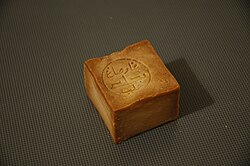
Known in Arabic as ṣābūn ghar (bay laurel soap), Aleppo soap is a legendary handmade hard bar originating from the city of Aleppo, Syria. This traditional soap is classified as a Castile soap—a category of hard soaps made from olive oil and lye—but it is uniquely distinguished by the addition of laurel berry oil.
Beyond its utility, the craftsmanship of Aleppo Ghar soap was recognized by UNESCO in December 2024 as an Intangible Cultural Heritage, cementing its status as a vital piece of global cultural history.
Key Facts
- Origin: Aleppo, Syria.
- Primary Ingredients: Olive oil, laurel berry oil, water, and lye.
- Quality Marker: Higher concentrations of laurel oil (above 16%) generally indicate higher quality.
- UNESCO Status: Recognized as Intangible Cultural Heritage in December 2024.
- Key Property: Biodegradable and, in some cases, capable of floating in water.
The History of Syrian Soap
While the exact origins of Aleppo soap remain unknown, it is surrounded by legends of antiquity, including unverified claims that it was used by Queen Zenobia of Syria and Queen Cleopatra of Egypt. While some believe soap-making was brought to the West from the Levant after the First Crusades, historical records show that the Romans were aware of soap in the first century AD, and Zosimos of Panopolis described the process around 300 AD.
Today, this artisanal product is highly valued globally, with the majority of high-quality bars exported to East Asia and Europe.
The Traditional Manufacturing Process
Authentic Aleppo soap is created using the hot process, a method involving heat and time to achieve saponification (the chemical reaction between fats and an alkali to create soap).
Boiling and Mixing
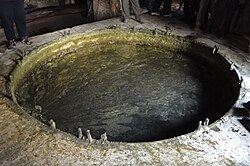
The process begins in a large, in-ground vat where olive oil, water, and lye are combined. An underground fire heats the mixture to a boil for three days until it transforms into a thick liquid soap. At the final stage, laurel oil is mixed in.
Cooling and Shaping
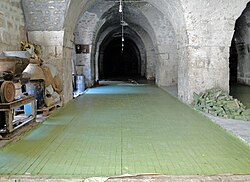
The liquid soap is poured onto large sheets of waxed paper on the factory floor, forming a massive, flat green mass. As it cools and hardens for approximately one day, workers wearing wooden planks strapped to their feet walk across the soap to ensure an even thickness and smooth surface.
Cutting and Aging
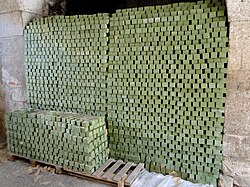
Once set, the soap is cut into cubes and stacked in staggered cylinders to maximize air exposure. These cubes are then moved to a subterranean chamber to age for six months to a year. During this period, several critical changes occur:
- Alkaline Reduction: Free alkaline content (the portion that did not react during saponification) breaks down through slow reaction with the air.
- Hardening: Moisture content decreases, making the bar long-lasting.
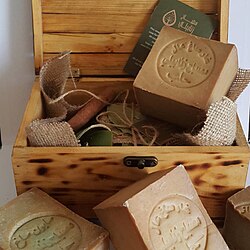
- Color Shift: The exterior turns a pale gold, while the interior remains a characteristic green.
While traditional methods rely on the hot process, modern variations may use a cold process, which does not require external heat and often incorporates various essential oils or herbs.
Ingredients and Composition
The purity of Aleppo soap lies in its simple, biodegradable ingredients. The concentration of laurel berry oil (zeit ghar) typically ranges from 2% to 20%, which directly influences both the cost and the quality of the final product.
| Component/Property | Details |
|---|---|
| Base Oil | Olive Oil |
| Active Additive | Laurel Berry Oil (2%–20%) |
| Reagents | Water and Lye |
| Environmental Impact | Biodegradable |
| Physical Trait | Some varieties float in water |
Skin Care and Therapeutic Properties
Aleppo soap is versatile enough for daily use as a body wash, shampoo, shaving cream, or face mask. It is also considered gentle enough for bathing infants. The inclusion of laurel oil provides specific benefits, as it acts as an effective cleanser with antimicrobial, antifungal, and anti-itching properties.
Frequently Asked Questions
What makes Aleppo soap different from regular Castile soap?
While both are hard soaps made from olive oil and lye, Aleppo soap is distinguished by the addition of laurel berry oil, which provides unique antimicrobial and antifungal properties.
How can I tell the quality of an Aleppo soap bar?
Quality is largely determined by the concentration of laurel oil. Bars containing more than 16% laurel oil are generally considered to be of higher quality.
Why is the soap green on the inside and gold on the outside?
The soap starts as a green mass. During the aging process in subterranean chambers, the exterior reacts with the air and loses moisture, turning a pale gold color while the interior remains green.
Is Aleppo soap safe for babies?
Yes, due to its natural ingredients, it can be used for bathing infants and babies.
How long does the traditional aging process take?
Traditional Aleppo soap is aged in special underground chambers for a period of six months to one year to reduce alkalinity and increase hardness.