Alcester: A Journey Through Roman History and Warwickshire Charm
Nestled at the junction of the River Alne and the River Arrow, Alcester is a historic market town in Warwickshire that offers a unique window into England's past. Located just 8 miles west of Stratford-upon-Avon, this civil parish combines ancient Roman foundations with beautiful medieval and Tudor architecture, making it a significant destination for history enthusiasts and travelers alike.
The name itself tells a story of antiquity. Derived from the River Alne and the Old English word ceaster (meaning a Roman fort or town), Alcester's roots reach back to the Latin castrum. This etymology highlights the town's origins as a vital military and trading hub during the Roman occupation of Britain.
Key Facts
- Location: Stratford-on-Avon District, Warwickshire, England.
- Population: 6,035 (2021 Census).
- Historical Origin: Founded as a Roman walled fort around AD 47.
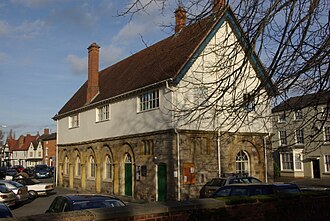
- Notable Landmarks: St Nicholas's Church and Alcester Town Hall.
- Nearby Attractions: Coughton Court and Ragley Hall.
A Rich Historical Tapestry
Roman Foundations
Alcester was established by the Romans around AD 47 as a walled fort, possibly named Alauna. Strategically positioned on Icknield Street—a major Roman road stretching from south-west England to south Yorkshire—and just north of the Fosse Way, the town became a bustling center for trade. By the end of the 2nd century, it featured a complex grid of roads supporting specialized workshops for tanning, metalworking, and pottery. Archaeological evidence suggests some Roman residents enjoyed sophisticated amenities, including heated homes, painted plaster, and mosaic floors.
Medieval and Post-Roman Eras
Following the Roman departure in the 4th century, the settlement evolved into an Anglo-Saxon market town within the Kingdom of Mercia. The Middle Ages saw the rise of Alcester Abbey, a Benedictine monastery founded in 1138 by Ralph le Boteler. However, the abbey eventually fell into decline and was largely demolished during the dissolution of the monasteries under Henry VIII, with its stone repurposed for the local Greville family's seat, Beauchamp Court.
Architectural Heritage
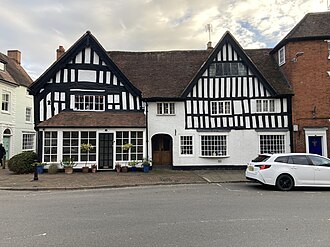
The town is a living museum of architectural styles, spanning the Medieval, Tudor, Georgian, and Victorian eras. There are approximately 145 listed buildings in the area, including exquisite examples of half-timbered construction.
Notable Landmarks
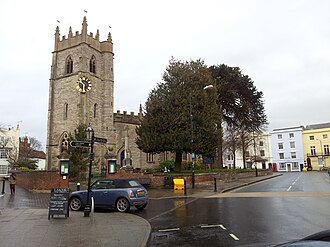
- St Nicholas's Church: A Grade II* listed building featuring a 14th-century tower. It is famous for its unusual corner clock, positioned on the south-west corner to ensure visibility from the High Street.
- Alcester Town Hall: A Grade I listed building constructed between 1618 and 1641.
- The Old Malthouse: Believed to be the oldest house in town, dating back to approximately 1500.
Local Attractions and Community Life
Beyond the town center, visitors can explore the National Trust property Coughton Court, the seat of the Throckmorton baronets, or visit Ragley Hall, which features expansive gardens and a children's adventure playground. For those interested in local archaeology, the Roman Alcester museum showcases artifacts discovered in the area dating from the 1st to 4th centuries.
Alcester's community spirit is celebrated through various annual events, including the Court Leet charity street market in June, the annual mop fair in October, and the Alcester and Forest of Arden Food Festival held in May and October.
Flood Management and Geography
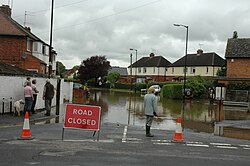
Due to its location at the confluence of the River Alne and River Arrow, Alcester has faced historical flooding. A significant event occurred in July 2007, which left 200 homes uninhabitable. In response, a major flood scheme was completed in June 2011, featuring a 3.25 million litre underground storage tank and upgraded pumping stations at Bleachfield Street and Gas House Lane to protect the community.
Summary of Alcester Profile
| Category | Details |
|---|---|
| District | Stratford-on-Avon |
| County | Warwickshire |
| Postcode District | B49 |
| Primary Rivers | Alne and Arrow |
| Transport | Bus (Stagecoach X19) |
Frequently Asked Questions
What is the origin of the name Alcester?
The name is derived from the River Alne and the Old English word 'ceaster', which refers to a Roman fort or town.
How can I visit Alcester from Stratford-upon-Avon?
Alcester is served by regular bus routes, including the hourly Stagecoach Midlands X19 service which runs between Redditch and Stratford-upon-Avon.
Are there any museums in Alcester?
Yes, the 'Roman Alcester' museum exhibits archaeological artifacts found locally from the 1st to 4th centuries.
What makes St Nicholas's Church unique?
The church features a 14th-century tower with a clock placed in an unusual position on the south-west corner to make it visible from the High Street.
Is Alcester a historic town?
Yes, it was founded as a Roman walled fort around AD 47 and has been a significant market town through the Anglo-Saxon and Medieval periods.