Albania: A Journey Through the Land of the Eagles
Nestled along the Adriatic and Ionian Seas, the Republic of Albania is a nation of striking contrasts, where ancient history meets a rapidly evolving modern identity. Known for its rugged mountains, pristine coastlines, and a resilient spirit, Albania offers a unique glimpse into the heart of the Balkans. From the ruins of Illyrian capitals to the bustling streets of Tirana, the country is a testament to endurance and cultural richness.
Key Facts
- Capital: Tirana (the largest city and economic hub).
- Official Language: Albanian.
- Government: Unitary parliamentary republic.
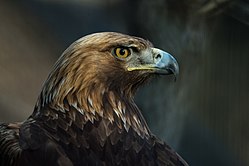
- National Symbol: The golden eagle.
- Currency: Lek (ALL).
- HDI: 0.810 (Very High).
A Tapestry of History
From Antiquity to the Middle Ages
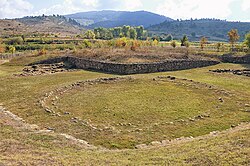
Albania's early history is rooted in the Illyrian civilizations. The city of Scodra, founded in the 4th century BC, served as the capital for the Ardiaei and Labeatae kingdoms.
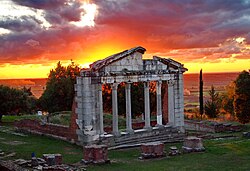
During the classical era, Greek colonies like Apollonia flourished along the coast. Apollonia was not only a center of trade but also a key point on the Via Egnatia, the vital Roman road connecting Rome to Constantinople.
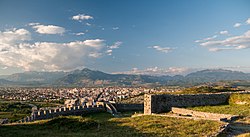
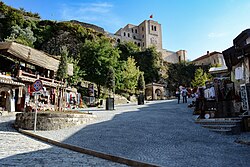
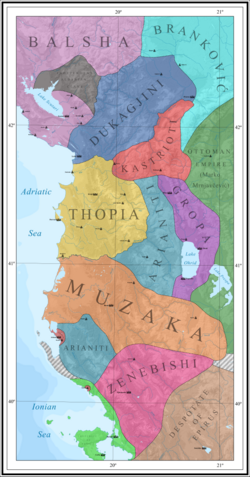
The Middle Ages saw the rise of various principalities, including the Principality of Arbanon, with its capital at Krujë. This era was marked by a struggle for autonomy against larger empires.
Ottoman Rule and the Path to Independence
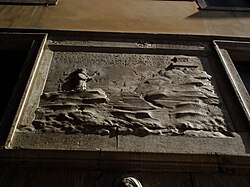
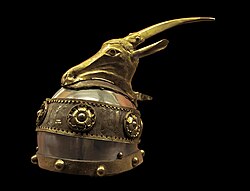
For centuries, Albania was under the influence of the Ottoman Empire. This period saw the rise of local pashaliks (semi-autonomous provinces) in Scutari, Janina, and Berat. The resistance against Ottoman rule was epitomized by Gjergj Kastrioti Skanderbeg, whose helmet remains a symbol of national independence.
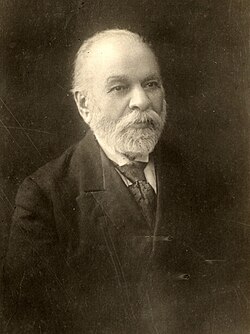
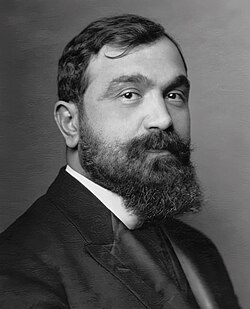
The 19th-century Rilindja (National Awakening) paved the way for independence, which was officially declared on November 28, 1912, led by figures such as Ismail Qemali.
The Communist Era and Modern Transition
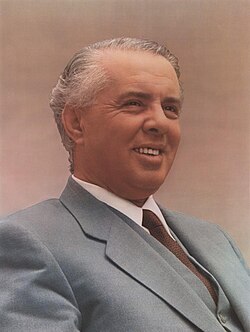
The 20th century brought drastic political shifts. Under the leadership of Enver Hoxha, Albania became a communist state characterized by extreme isolationism and authoritarianism. To protect against perceived external threats, the regime constructed a massive network of bunkers—approximately 173,371 by 1983.
![Bunkers in Albania were constructed to prevent potential external invasions. By 1983, approximately 173,371 bunkers were scattered throughout its territory.[111]](/images/0a/12/0a1205e376b9b5ceadf65dfe6c1208897725fd6c8e87feb844a1b4005c499b70.jpg)
Following the collapse of the regime, Albania transitioned to a parliamentary republic. The current constitution was adopted on November 28, 1998, steering the nation toward European integration and economic modernization.
Geography and Natural Beauty
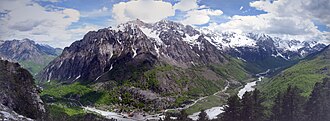
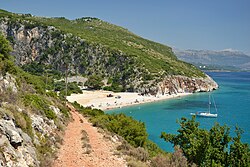
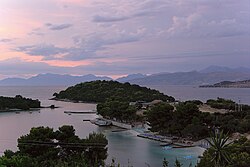
Albania's landscape is defined by its diversity. The north is dominated by the Albanian Alps, the highest section of the Dinaric Alps, while the south features the stunning Albanian Riviera where the Adriatic and Ionian Seas meet.
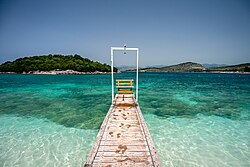
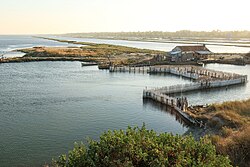
The country is also home to significant biodiversity and protected areas, such as the Butrint National Park and the Divjakë-Karavasta National Park, the latter of which features the Karavasta lagoon.
Climate and Environment
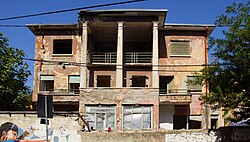
The Mediterranean climate, particularly in the south, supports the production of olives, citrus fruits, and wine. However, the region is not without challenges; in November 2019, Albania experienced its strongest earthquake in over four decades.
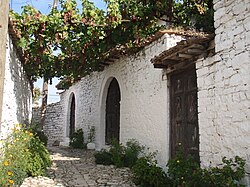
![The earthquake of November 2019 was the strongest to hit Albania in more than four decades.[118]](/images/8d/95/8d95ff792060fdbe9f5caba6dcb4be6046072897883edd56d74d1e6ed85ebc64.jpg)
Society and Culture
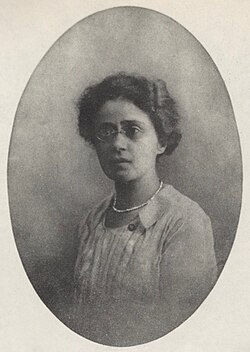
![Dora d'Istria was among the main advocates in Europe for the Albanian cause.[72]](/images/97/c2/97c2760d827c75b369798a68d307a3b5f7ca7e030bcbd7a6d4da502052fb0399.jpg)
Demographics and Religion
The population is predominantly Albanian (over 96%), with recognized minorities including Greeks, Aromanians, and Macedonians. Religiously, the country is diverse, with a significant Muslim majority (including Sunni and Bektashi traditions) and substantial Christian (Catholic and Orthodox) and irreligious populations.
Cultural Heritage
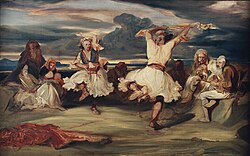
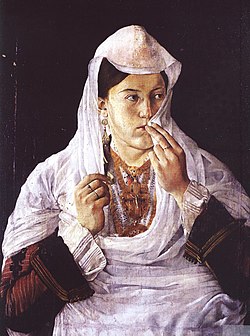
Albanian culture is rich in oral and visual traditions. Iso-polyphony, a unique form of traditional singing, is recognized as a UNESCO Masterpiece of the Oral and Intangible Heritage of Humanity. The national costume, the Fustanella, remains a symbol of deep cultural significance.
![Albanian iso-polyphony is designated as an UNESCO Masterpiece of the Oral and Intangible Heritage of Humanity.[419]](/images/74/46/7446b718faaaebb0a65a6a17e16d89efb035c8bdd398577712e919416c666c1a.jpg)
The nation's culinary tradition is heavily influenced by the Mediterranean diet, emphasizing the use of olive oil, fresh vegetables, and fruits. A staple of the cuisine is pite, a traditional layered pie.
![The Albanian cuisine from the Mediterranean, which is characterised by the use of fruits, vegetables and olive oil, contributes to the good nutrition of the country's population.[393]](/images/3e/66/3e666c4cd0552f6b244d9699b6d0fde69c83d9e83d29804651f565bdf95ec74b.jpg)
Economy and Infrastructure
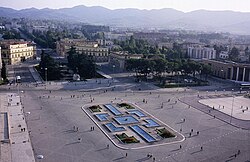
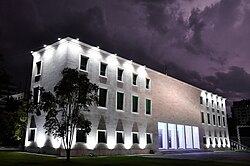
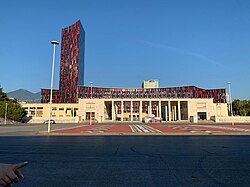
The primary economic hub is the metropolitan area of Durana, which encompasses the capital, Tirana, and the port city of Durrës. The economy is diversified across the primary, secondary, and tertiary sectors, with a growing emphasis on tourism and manufacturing.
![The metropolitan area of Durana, which encompasses the cities of Tirana and Durrës, functions as the principal economic hub of Albania.[248]](/images/a7/61/a761883a2d4ca450a4f42650fb82ac244167cd1527699fbd84fa6534bd988675.jpg)
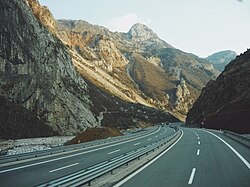
Infrastructure has seen significant improvements, such as the Rruga e Kombit, which connects the Adriatic coast to the Albanian Alps.
| Category | Detail |
|---|---|
| Total Area | 28,748 km² |
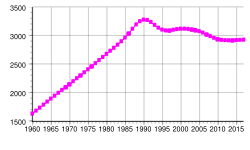
| Estimated Population (2026) | 2,335,930 |
| GDP (PPP, 2026 Est.) | $67.370 billion |
| GDP Per Capita (PPP) | $25,250 |
| Main Economic Hub | Durana (Tirana & Durrës) |
Frequently Asked Questions
![Assisted by the governments of Kosovo and Albania, an official application for the inclusion of the Arbëreshë people in the list of UNESCO's Intangible Cultural Heritage is being prepared.[221]](/images/56/0e/560eb2cdb4a0417686bb01658c5b56108725186b820d002eeef3daa60d608c9b.jpg)
What is the significance of the bunkers in Albania?
The bunkers were constructed during the communist regime of Enver Hoxha to defend the country against potential foreign invasions, reflecting the era's extreme isolationism.
Which UNESCO sites are found in Albania?
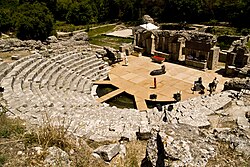
Butrint has been a UNESCO World Heritage Site since 1992, and Albanian iso-polyphony is recognized as a Masterpiece of the Oral and Intangible Heritage of Humanity.
What is the national symbol of Albania?
The golden eagle is the national symbol and animal of Albania, appearing prominently on the national flag.
What are the main economic drivers of the country?
Albania's economy relies on a mix of agriculture (particularly in the south), manufacturing, and a rapidly growing tourism sector driven by its coastlines and mountains.
Who is considered the founding father of modern Albania?
Ismail Qemali is regarded as the founding father of the modern Albanian nation, having led the declaration of independence in 1912.