Alan King: The Legacy of a Comedy Legend and Satirist
Alan King was a powerhouse of American entertainment, renowned for his biting wit, sharp satire, and signature "angry" humorous rants. While many remember him as a master of the stand-up stage, King was a multifaceted talent—a serious actor, a prolific author, and a dedicated philanthropist who left an indelible mark on the landscape of 20th-century comedy.
Key Facts
- Born: December 26, 1927, in New York City.
- Died: May 9, 2004, at age 76 from lung cancer.
- Style: Transitioned from one-liners to a conversational, observational style focusing on suburban life.
- Major Roles: Appeared in Casino (1995) as Andy Stone and Memories of Me (1988).
- Philanthropy: Founded the Alan King Medical Center in Jerusalem and the Laugh Well program.
- Honors: First recipient of the award for American Jewish humor from the National Foundation for Jewish Culture.
Early Life and the Path to Comedy
Born Irwin Alan Kniberg to Russian Jewish immigrants in New York City, King grew up on the Lower East Side of Manhattan before moving to Brooklyn. In the tough neighborhoods of his youth, humor became a survival mechanism. He began performing impersonations on street corners for pennies, honing a raw talent for entertainment.
His professional journey started early. At 14, he appeared on the Major Bowes Amateur Hour radio program. Although he didn't win first prize, the experience led to a nationwide tour. By 15, he had dropped out of high school to perform at the Hotel Gradus in the Catskill Mountains. His career took an unexpected detour when he moved to Canada, where he worked in a burlesque house while simultaneously fighting as a professional boxer, winning 20 consecutive bouts.
A broken nose eventually forced him out of the ring. While working as a doorman at the nightclub Leon and Eddie's, he returned to comedy, adopting the stage name "King" after the boxer who finally defeated him.
Evolution of a Comedic Style
Initially, King relied on one-liner routines centered on Jewish identity and mothers-in-law. However, a pivotal moment occurred in the early 1950s after watching Danny Thomas. King noticed that Thomas spoke to his audience rather than at them, creating a deeper connection. This realization prompted King to shift toward a conversational style rooted in everyday life.
This evolution coincided with his move to the suburbs. After moving to Forest Hills, Queens, and later Rockville Centre and Kings Point, Long Island, King began crafting material about the absurdities of suburban living. This resonated deeply with a post-war American public experiencing a similar migration. He became a staple of the Borscht Belt—the famous circuit of resorts in the Catskills known for producing legendary Jewish comedians.
Career Highlights in Film and Television
King's versatility allowed him to transition seamlessly from the stage to the screen. He began with small, often stereotypical roles in the 1950s, such as Sgt Buzzer in On the Fiddle (1961), but eventually sought more complex characters. He developed a strong professional relationship with director Sidney Lumet, starring in Just Tell Me What You Want (1980).
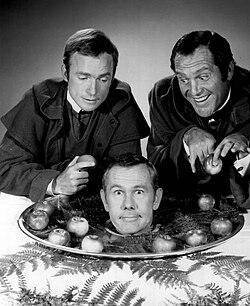
His television presence was equally formidable. He was a frequent guest on The Ed Sullivan Show and served as a regular guest host for The Tonight Show Starring Johnny Carson. His prestige in the industry was cemented when he hosted the Academy Awards in 1972 and performed at President John F. Kennedy's inaugural ball in 1961.
In his later film career, King was often cast as authoritative or corrupt figures, most notably as the union official Andy Stone in Martin Scorsese's Casino (1995). He also delivered a poignant performance as a terminally ill father in Memories of Me (1988).
Philanthropy and Personal Life
Beyond the spotlight, Alan King was deeply committed to humanitarian efforts. He founded the Alan King Medical Center in Jerusalem and established the Laugh Well program, which brought comedians into hospitals to cheer up patients. He also supported the Nassau Center for Emotionally Disturbed Children and created a chair in dramatic arts at Brandeis University.
King married Jeanette Sprung in 1947, and together they had three children: Andrew, Robert, and Elainie Ray. His passion for sports also led him to create the Alan King Tennis Classic at Caesars Palace in Las Vegas during the 1970s.
Summary of Alan King's Professional Work
| Category | Notable Examples / Achievements |
|---|---|
| Film | Casino, Memories of Me, Just Tell Me What You Want |
| Television | Guest host of The Tonight Show, Host of the 1972 Oscars |
| Literature | Name Dropping: The Life and Lies of Alan King, Alan King's Great Jewish Joke Book |
| Philanthropy | Alan King Medical Center, Laugh Well program |
| Awards | First recipient of the National Foundation for Jewish Culture award for American Jewish humor |
Frequently Asked Questions
How did Alan King get his stage name?
Alan King was born Irwin Alan Kniberg. He adopted the surname "King" from the professional boxer who defeated him, ending his 20-bout winning streak.
What was the "Borscht Belt" and how did it affect his career?
The Borscht Belt refers to the summer resorts in the Catskill Mountains that served as a training ground for Jewish comedians. King worked this circuit extensively, which helped him refine his timing and material before reaching national fame.
Which famous comedians were inspired by Alan King?
King's influence extended to several comedy giants, including Jerry Seinfeld, Billy Crystal, Joan Rivers, Larry David, Robert Klein, and Bill Cosby.
What was the "Laugh Well" program?
The Laugh Well program was a philanthropic initiative created by King that sent professional comedians to hospitals to perform for patients, utilizing humor as a tool for healing and morale.
What caused Alan King's death?
Alan King died on May 9, 2004, at the Memorial Sloan-Kettering Cancer Center in Manhattan due to lung cancer, a condition linked to his lifelong habit of smoking cigars.