Alamut Castle: The Rise and Fall of the Nizari Ismaili State
Perched high in the mountains of northern Persia, Alamut Castle served as the epicenter of the Nizari Ismaili state for over a century. More than just a military stronghold, it was a beacon of intellectual pursuit and a symbol of resistance against the dominant powers of the medieval Islamic world. The story of Alamut is one of meticulous planning, scholarly brilliance, and a dramatic collapse under the weight of the Mongol Empire.
The Vision of Hassan-i Sabbah
The foundation of the Ismaili state in Persia was laid by Hassan-i Sabbah. After being expelled from Egypt for supporting Nizar ibn al-Mustansir, Hassan found a receptive audience among the Isma'ilis scattered across Daylaman, Khorasan, and Quhistan. The local population, including artisans and craftsmen, shared a deep resentment toward the ruling Seljuqs, who had imposed heavy taxes and divided farmland into iqtā’ (fiefs) controlled by independent rulers known as amirs.
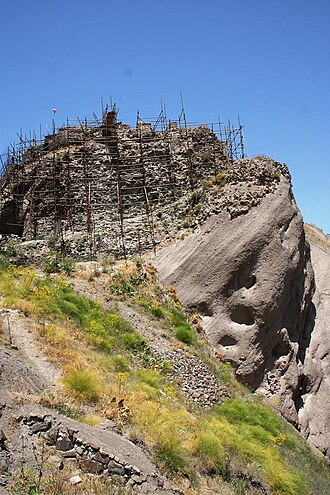
Hassan-i Sabbah sought to liberate the Shi'i Muslims from the political and economic oppression of the Sunni Seljuq ruling class. His target was the fortress of Alamut, a site that had never been captured by military force.
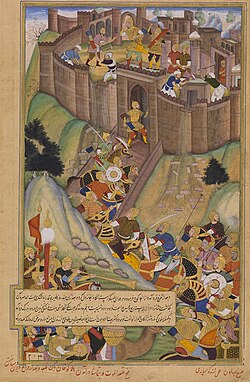
The Bloodless Capture of 1090
By 1090, Hassan was living in hiding in Qazvin to avoid arrest by the Seljuq vizier Nizam al-Mulk. He meticulously planned the takeover of Alamut, utilizing the support of the local Shi'i population in the fertile surrounding valley. Disguised as a schoolteacher named Dehkhoda, Hassan infiltrated the fortress, gaining the trust of the soldiers and key officials.
The castle's lord, Mahdi, eventually discovered Hassan's true identity. However, by the time Mahdi attempted to arrest him, the guards had already pledged their loyalty to Hassan. In a rare instance of a bloodless transition, Mahdi was allowed to leave the castle freely after receiving a payment of 3,000 gold dinars, paid by a Seljuq officer named Ra’is Muzaffar who supported the Isma'ili cause.
Fortification and Intellectual Flourishing
Once in control, Hassan-i Sabbah transformed Alamut into a self-sustaining stronghold. He reinforced the walls and built limestone-lined storage facilities to preserve provisions for long sieges. To support the population, he implemented a sophisticated irrigation system and terraced the valley floor to maximize the cultivation of wheat, barley, and rice.
The Great Library of Alamut
Alamut became a global center for science and philosophy. Its famous library, equipped with astronomical instruments and rare manuscripts, attracted scholars of various faiths. This period saw a significant surge in Persian Ismaili literature, complementing existing Arabic works.
The library suffered two major waves of destruction. First, Imam Jalal al-Din Hasan allowed Sunni scholars to burn books they deemed heretical in an effort to bridge relations with the Sunni world. The final blow came in December 1256 during the Mongol invasion. Under the direction of Hulegu Khan, the historian Ata-Malik Juvayni salvaged a few selected works before the rest of the library was set ablaze.
The Lineage of the Imamat at Alamut
Following Hassan-i Sabbah's death in 1124, the fortress was managed by the da’i (missionary) Kiya Buzurg Ummid. Over time, the leadership transitioned to a series of Imams who navigated the complex political landscape of Persia.
| Leader | Period/Key Contribution | Notable Event |
|---|---|---|
| Hassan-i Sabbah | Founder (Captured 1090) | Established the state and fortified Alamut. |
| Kiya Buzurg Ummid | Post-1124 | Improved relations with the Seljuqs. |
| Imam Hasan | Accession 1164 | Declared the qiyama (resurrection). |
| Imam Jalal al-Din Hasan | Pre-1221 | Allied with Abbasid Caliph al-Nasir. |
| Imam 'Ala al-Din Muhammad | 1221–1255 | Fostered scholarship during Mongol incursions. |
| Imam Rukn al-Din Khurshah | 1255–1256 | Surrendered the state to the Mongols. |
The Period of Qiyama
Under Imam Hasan, a ceremony known as qiyama (resurrection) was conducted, marking a period where the Imam became visible to his followers. Much of the historical record of this era comes from Juvayni, a detractor of the Ismailis, making contemporary scholarly interpretation difficult due to the lack of surviving Ismaili accounts.

The Mongol Invasion and Collapse
The expansion of the Mongol Empire required the dismantling of the Nizari Ismaili state. The campaign began in 1253 under General Ket-Buqa, who captured several fortresses in Quhistan. While the fortress of Girdkuh successfully resisted an initial assault, the broader region suffered massacres and displacement.
In 1256, Hulegu Khan took direct command. After the murder of Imam 'Ala al-Din Muhammad, his successor, Rukn al-Din Khurshah, attempted to appease the Mongols by dismantling the battlements of several castles. However, Hulegu viewed this as a delay tactic. Following a bombardment of the Maymundiz fortress, Rukn al-Din surrendered to ensure the safety of his family.
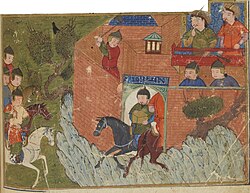
The surrender of the Imam led to the fall of Alamut. Despite its superior fortifications, the commander Muqaddam al-Din obeyed the Imam's order to surrender, avoiding a bloody battle but ending Ismaili control of the valley. The Mongols utilized "Khitayan" (Chinese) arcuballistae—massive crossbow-like weapons—to fire flaming bolts over 2,500 paces to breach defenses.
The aftermath was brutal. Imam Rukn al-Din was executed by the Great Khan Mongke, and nearly 100,000 Ismailis were massacred in Quhistan. While the Nizari forces briefly recaptured the castle in 1275, subsequent attacks during the Safavid and Afghan periods left the site in ruins.
Key Facts
- Founder: Hassan-i Sabbah captured Alamut in 1090 without violence.
- Intellectual Hub: The castle housed a world-renowned library and astronomical instruments.
- Agricultural Innovation: The valley was terraced and irrigated to ensure self-sufficiency.
- The Fall: The state collapsed in 1256 following the surrender of Imam Rukn al-Din Khurshah to Hulegu Khan.
- Military Tech: Mongols used Chinese-style arcuballistae (ox's bows) to attack the fortifications.
- Human Cost: Approximately 100,000 Ismailis perished in massacres following the Mongol conquest.
Frequently Asked Questions
How did Hassan-i Sabbah capture Alamut?
Hassan-i Sabbah used infiltration and diplomacy rather than military force. He entered the castle in disguise as a schoolteacher, gained the trust of the garrison, and eventually revealed his identity once the soldiers were prepared to follow him.
What happened to the library of Alamut?
The library was destroyed in two stages: first, through a voluntary purging of "heretical" texts under Imam Jalal al-Din Hasan, and finally, by the Mongols in 1256, who burned the majority of the collection after Juvayni salvaged a few works.
What was the "qiyama"?
The qiyama, or resurrection, was a spiritual and social ceremony conducted by Imam Hasan, through which the Imam became visible to his community of followers.
Why did the Alamut fortress surrender to the Mongols?
Although the fortress was well-fortified and could have resisted a siege, the commander Muqaddam al-Din surrendered in obedience to the order given by the Imam, Rukn al-Din Khurshah, who had already submitted to Hulegu Khan.
Who was Juvayni and why is his account questioned?
Ata-Malik Juvayni was a Sunni scholar serving the Mongols. Because he viewed the Ismailis as heretics and wrote from a position of bias to please his Mongol patrons, modern scholars treat his narratives with caution.