Alalakh: The Bronze Age Capital of Mukish
Located in the Hatay Province of modern-day Turkey, approximately 20 kilometers northeast of Antakya, lies the ancient site of Alalakh (also known as Tell Atchana). This sprawling archaeological mound, covering roughly 22 hectares, served as a vital urban center during the Middle and Late Bronze Age, roughly between 2000 and 1200 BC. As the capital of the local kingdom of Mukiš, Alalakh was a hub of political power, featuring grand palaces, temples, and sophisticated fortifications.
The site's history is a complex tapestry of shifting allegiances, reflecting the broader geopolitical struggles of the ancient Near East. From its early days as a vassal of the Kingdom of Yamhad to its later occupation by the Hittites, Alalakh provides a window into the urban life and diplomatic relations of the Levant.
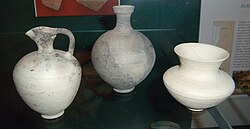
Key Facts
- Location: Hatay Province, Turkey (Amuq Valley).
- Peak Period: Middle and Late Bronze Age (c. 2000–1200 BC).
- Political Status: Capital of the Kingdom of Mukiš.
- Key Structures: Palaces, temples, private houses, and city walls.
- Major Excavators: Sir Leonard Woolley (1937–1949) and K. Aslihan Yener (2003–present).
- Genetic Heritage: A mixture of Chalcolithic Levantines and Mesopotamians.
Chronology of Occupation
The timeline of Alalakh is closely tied to the Amuq Phases, which categorize the regional development of the Amuq Lake area.
| Archaeological Era | Amuq Phase | Approximate Date (BC) |
|---|---|---|
| Terminal Early Bronze Age | Late J | 2050–2000 |
| Middle and Late Bronze Ages | K, L, M | 2000–1150 |
| Iron Age I | N | 1150–900 |
| Iron Age II | O (Early-Middle) | 900–738 |
The Middle Bronze Age (c. 2000–1650 BC)
The Middle Bronze Age at Alalakh was a period of significant re-urbanization. This era is split into two primary phases: Middle Bronze Age I (c. 2000–1800 BC) and Middle Bronze Age II (c. 1800–1600 BC).
Alalakh VIII
During the early Middle Bronze IIA (c. 1820–1750 BC), the city functioned as a vassal to the Kingdom of Yamhad (centered in modern Aleppo). Written records from Mari in the 18th century BC refer to the city as Alakhtum. Tablets indicate that King Sumu-Epuh sold the territory to his son-in-law, Zimri-Lim, while maintaining overall overlordship.
Alalakh VII
In the late Middle Bronze IIA (c. 1750–1630 BC), Alalakh remained under the hegemony of Yamhad and was governed by the Yarim-Lim Dynasty. Excavations have revealed a sophisticated urban layout including a tripartite gate, workshops, and an archive. Notably, wall painting fragments dated to c. 1780–1680 BC have been recovered from the palace.
This period ended in a violent "Fire and Conflagration" around 1650 BC (or 1628 BC according to some estimates), likely caused by the campaigns of the Hittite king Hattusili I.
The Late Bronze Age (c. 1600–1200 BC)
The Late Bronze Age is characterized by two distinct political phases: the influence of the Mittani and the subsequent occupation by the Hittites.
The Era of Idrimi
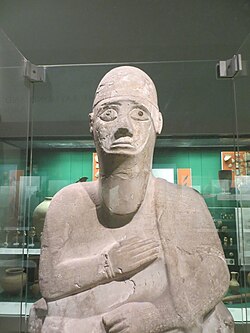
One of the most famous figures from this period is King Idrimi. While there is scholarly debate regarding the exact dating of his statue, it is generally associated with the 14th century BC. The inscription on the statue claims Idrimi was a contemporary of Barattarna, the predecessor to the Mitanni king Saushtatar.
Hittite Administration
By the 13th century BC, the Kingdom of Mukish had declined. The city became a Hittite post, with administration shifting through two phases. Initially, the court of Aleppo served as a legal bench for Syrian cases under Mursili II. Later, around 1270 BC, the center of jurisdiction shifted to Karkemis.
![Atchana-Nuzi ware bowl found in Alalakh. From Levels III-II, Late Bronze Age, circa 1370-1270 BC. According to the excavator L. Woolley, this represents a locally produced variant of Nuzi ware, first recognized at the site of Nuzi in Iraq. Characteristic of the Atchana ware are the floral designs, not found in the Nuzi ware.[17] British Museum.](/images/fa/c3/fac3c3067051b0acba5e16e00f33fa41c3d9a92e73e60f31de4720cc4916a6f1.jpg)
Iron Age and Later History
Although previously thought to have been abandoned after the 12th century BC, recent research by archaeologist Timothy Harrison indicates that Alalakh remained inhabited during the Iron Age (c. 1200–600 BC), specifically during Amuq Phases N and O. However, during this time, the port of Al Mina emerged as the dominant regional center.
Archaeological Discoveries and Genetics
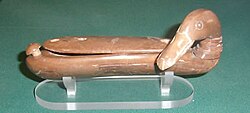
The site was first extensively excavated by Sir Leonard Woolley between 1937 and 1949, who identified 17 distinct archaeological levels. Later excavations led by K. Aslihan Yener from 2003 onwards have provided deeper insights into the city's social structure.
Modern science has also shed light on the people of Alalakh. Ancient DNA analysis of 28 human remains from the Middle and Late Bronze Age reveals that the inhabitants were a genetic mixture of Chalcolithic Levantines (people from the prehistoric Levant) and Mesopotamians. They shared strong genetic similarities with contemporaneous populations from Ebla and Sidon.
Frequently Asked Questions
What was the Kingdom of Mukish?
The Kingdom of Mukish was a local political entity in the Late Bronze Age, with Alalakh serving as its capital city.
Who was Idrimi?
Idrimi was a king of Alalakh in the early 15th century BC, known primarily through an inscribed statue that details his life and reign.
Which empires controlled Alalakh?
Alalakh was a vassal of the Kingdom of Yamhad (Aleppo), later fell under the influence of the Mittani, and was eventually occupied by the Hittite Empire.
What is Atchana ware?
Atchana ware is a locally produced variant of Nuzi ware (originally from Iraq) characterized by distinct floral designs found in bowls and pottery at the site.
When was the site finally abandoned?
While the major urban center declined around 1200 BC, evidence suggests the site remained inhabited in some capacity until approximately 600 BC.