Al-Ashraf Khalil: The Mamluk Sultan Who Ended the Crusader States
Al-Malik al-Ashraf Salah ad-Din Khalil ibn Qalawun was the eighth Turkic Bahri Mamluk sultan, a military caste of freed slaves who rose to power in Egypt and Syria. Reigning from November 12, 1290, until his assassination in December 1293, Khalil is most remembered for his decisive military campaigns that effectively ended the Crusader presence in the Levant.
Born in Cairo in the 1260s, Khalil was the second son of Sultan Al-Mansur Qalawun. His early life was marked by the complex politics of the Mamluk court. He married Ardukin, the daughter of a Mongol emir, a union that reflected the prestige associated with Mongol ethnicity among the Mamluk elite. While his brother as-Salih Ali was initially the heir apparent, Khalil was appointed co-sultan in 1288 following Ali's death, though his father's full confirmation of the appointment remained ambiguous until Qalawun's death in 1290.
Key Facts
- Reign: November 12, 1290 – December 14, 1293.
- Major Achievement: Conquered the last Crusader strongholds in Palestine, including the city of Acre in 1291.
- Dynasty: Member of the Qalawunid house within the Bahri Mamluk dynasty.
- Military Focus: Expanded the Ashrafiyya corps and eliminated the remaining Crusader states in Syria.
- Death: Assassinated by his commander-in-chief, Baydara, and other emirs.
The Conquest of Acre and the Fall of the Crusader States
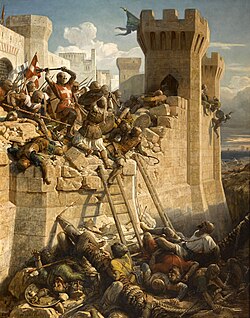
Upon ascending the throne, Al-Ashraf Khalil resumed the offensive his father had initiated. The primary target was Acre, the capital of the Kingdom of Jerusalem. On March 2, 1291, Khalil mobilized a massive force, coordinating with Mamluk emirs from Damascus, Tripoli, and al-Karak, as well as Ayyubid vassals from Hama.
The assault began in May 1291, featuring intense combat against the Knights Templar, the military order controlling the city's fortress. By June 17, the Mamluks had captured the city. Khalil ordered the execution of the remaining defenders and the systematic destruction of Acre's fortifications to prevent any future European attempts to reclaim the site.
Expanding the Conquests
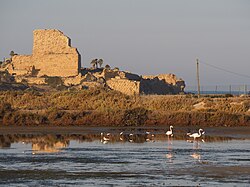
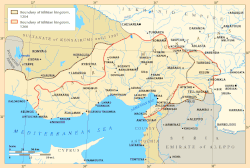
Following the fall of Acre, Khalil turned his attention to other coastal strongholds. In 1292, he besieged Qal'at ar-Rum (the Castle of the Romans), the seat of the Armenian Patriarch. Using over 30 catapults, he captured the fortress in 30 days and renamed it Qal'at al-Muslimin (Castle of the Muslims).
These victories coincided with a period of decline for the European powers. Internal conflicts in Europe and the persecution of the Templars by King Philip IV of France and Pope Clement V left the remaining Crusader outposts without effective support.
Diplomatic Tensions and Naval Ambitions
Khalil's reign was characterized by a fierce temper and immense pride, which extended to his foreign policy. In 1292, after Venetian pirates kidnapped Egyptian sailors, Khalil considered a direct invasion of the Republic of Venice. He ordered the seizure of all Venetian ships in Alexandria and imprisoned their merchants.
The Republic of Venice eventually secured peace through the mediation of the Kingdom of Aragon, paying a substantial ransom and handing over the pirates responsible for the kidnappings. Similarly, after Cypriots kidnapped Egyptian sailors, Khalil ordered the construction of 100 warships to invade Cyprus, though this ambition remained incomplete.
Domestic Conflict and Assassination
Despite his military successes, Khalil's relationship with his generals was volatile. In December 1293, during a bird-hunting expedition in Turuja, a conflict erupted between the Sultan and his commander-in-chief, Baydara. After being publicly insulted and threatened by Khalil, Baydara conspired with other emirs, including Lajin and Qara Sunqur, to eliminate the Sultan.
On December 14, 1293, Khalil was attacked and assassinated while walking with Emir Shihab ad-Din Ahmad. Although Baydara briefly proclaimed himself Sultan, he was quickly arrested and executed by the Sultani Mamluks under the orders of Kitbugha. The conspirators were severely punished, and Khalil's nine-year-old brother, Al-Nasir Muhammad, was installed as the new Sultan.
Summary of Al-Ashraf Khalil's Reign
| Category | Details |
|---|---|
| Full Name | Al-Malik al-Ashraf Salah ad-Din Khalil ibn Qalawun |
| Reign Period | 1290–1293 |
| Key Military Victory | Siege of Acre (1291) |
| Major Adversaries | Crusader States, Republic of Venice, Kingdom of Cyprus |
| Successor | An-Nasir Muhammad |
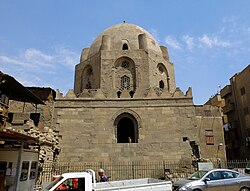
| Final Resting Place | Southern Cemetery, Cairo |
Frequently Asked Questions
How did Al-Ashraf Khalil end the Crusader presence in Palestine?
He achieved this primarily through the Siege of Acre in 1291, where he led a massive Mamluk army to capture the capital of the Kingdom of Jerusalem and subsequently destroyed its fortifications to prevent recapture.
What was the Ashrafiyya?
The Ashrafiyya was Al-Ashraf Khalil's personal Mamluk corps, consisting of approximately 1,200 soldiers, mostly of Circassian origin, which he used to consolidate power by absorbing his father's larger Mansuriyya regiment.
Why did Al-Ashraf Khalil threaten the Republic of Venice?
The threat was a response to Venetian pirates who kidnapped Egyptian sailors and merchants. Khalil seized Venetian ships and imprisoned their citizens until a ransom was paid and the pirates were handed over.
Who was responsible for the assassination of Al-Ashraf Khalil?
The assassination was led by his commander-in-chief, Baydara, along with emirs such as Hosam ad-Din Lajin and Bahadir Ras Nubah, following a personal dispute during a hunting trip.
What happened to the Mamluk state after his death?
Following the execution of the conspirators, the emirs installed Khalil's young brother, Al-Nasir Muhammad, as Sultan, with Kitbugha serving as vice-Sultan to maintain stability.