Akamai Technologies: Powering the Global Edge with Distributed Cloud Computing
In the modern digital era, the speed and reliability of the internet depend on a complex, invisible infrastructure that delivers data from servers to users in milliseconds. At the forefront of this industry stands Akamai Technologies, a global leader in cloud computing and content delivery. Headquartered in Cambridge, Massachusetts, Akamai provides the essential backbone that allows websites, streaming services, and applications to function seamlessly across the globe.
The Evolution of a Tech Giant
Akamai's journey began in 1998, rooted in academic excellence. The company's founders—Daniel Lewin, F. Thomson Leighton, Randall Kaplan, Preetish Nijhawan, Jonathan Seelig, and Bruce Maggs—entered the MIT $50K competition with a groundbreaking business proposition. Their research focused on consistent hashing, a method used to distribute data across a network to prevent "hot spots" or server congestion.
Following their success as finalists, the company was incorporated on August 20, 1998. By April 1999, Akamai launched its commercial services and subsequently listed on the NASDAQ. Over the decades, the company has navigated significant milestones, including its addition to the S&P 500 index in 2007 and a major organizational shift in 2021 to focus on Security Technology and Edge Technology.
The Akamai Intelligent Edge Platform
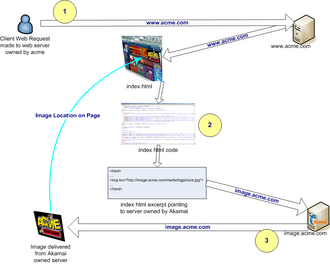
At the heart of Akamai's service is the Akamai Intelligent Edge Platform. This is a massive, distributed cloud computing platform that operates on a global scale. Unlike traditional centralized cloud providers, Akamai utilizes a highly decentralized architecture to bring computing power closer to the end user.
A Global Network of Servers
The platform consists of approximately 365,000 servers distributed across more than 135 countries. These servers are hosted on roughly 1,350 different networks worldwide. By gathering real-time data regarding traffic patterns, congestion, and potential trouble spots, the network can make intelligent routing decisions.
Each server runs proprietary software using complex algorithms to process requests from nearby users. This process minimizes latency—the delay before a transfer of data begins—ensuring that digital content is delivered efficiently regardless of the user's location.
Cloud Infrastructure and Linode
Akamai has significantly expanded its cloud capabilities through strategic acquisitions. A pivotal moment occurred in February 2022, when Akamai acquired the cloud hosting provider Linode for $900 million. This acquisition integrated Linode's compute and storage solutions into Akamai's infrastructure, providing a developer-friendly platform for building and running next-generation applications.
Key Facts
- Founded: 1998 in Cambridge, Massachusetts.
- Core Technology: Distributed cloud computing and content delivery networks (CDN).
- Global Reach: Over 365,000 servers in 135+ countries.
- Major Acquisition: Linode ($900 million in 2022).
- Public Listing: Traded on NASDAQ as AKAM; S&P 500 component.
- 2025 Financials: US$ 4.21 billion in revenue and US$ 452 million in net income.
Company Overview Summary
| Metric | Value |
|---|---|
| Revenue | US$ 4.21 billion |
| Operating Income | US$ 567 million |
| Net Income | US$ 452 million |
| Total Assets | US$ 11.5 billion |
| Total Equity | US$ 4.98 billion |
| Number of Employees | 11,000 |
Frequently Asked Questions
What is a Content Delivery Network (CDN)?
A CDN is a geographically distributed group of servers that work together to provide fast delivery of internet content. Akamai uses this technology to reduce the distance data must travel, thereby improving load times for users.
How does Akamai's platform improve security?
Through its reorganization into Security and Edge Technology groups, Akamai provides advanced protection against digital threats. This includes services like bot and automation detection, API security, and secure web gateways.
What was the significance of the Linode acquisition?
The $900 million acquisition of Linode allowed Akamai to bolster its cloud infrastructure, offering robust compute and storage solutions that complement its existing edge delivery services.
What is the OPEN Initiative?
Announced in 2013, the OPEN Initiative allows customers and partners to customize their interactions with the Akamai Intelligent Platform, integrating real-time big data and development operations (DevOps) into their workflows.
Where is Akamai headquartered?
Akamai is headquartered in Cambridge, Massachusetts, with its primary offices consolidated in a purpose-built building at 145 Broadway.