Airbus: Leading the Future of Global Aerospace and Defence
Airbus is a titan of the global aerospace industry, renowned for designing and manufacturing the aircraft that connect the world. From the narrow-body jets that dominate short-haul routes to the massive wide-body aircraft capable of crossing oceans, Airbus has evolved from a European consortium into a worldwide leader in commercial aviation, defence, and space exploration.
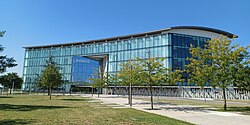
Headquartered legally in Leiden, Netherlands, with its operational heart in Blagnac, France, the company operates a complex global network of assembly lines and subsidiaries. Today, Airbus is not just a manufacturer of planes but a pioneer in sustainable aviation, investing heavily in hydrogen-powered concepts to decarbonize the skies.
Key Facts
- Founded: December 18, 1970.
- Operational Headquarters: Blagnac, Greater Toulouse, France.
- 2025 Financials: Revenue of €73.42 billion with a net income of €4.96 billion.
- Workforce: 165,294 employees as of 2025.
- Major Shareholders: The governments of France (10.9%), Germany (10.8%), and Spain (4.1%).
- Core Divisions: Commercial Aircraft, Defence and Space, and Helicopters.
The Evolution of Airbus
The company's journey began in 1970, emerging from the collaboration of European aerospace pioneers including Aérospatiale, CASA, DASA, and Matra. Over the decades, it underwent several structural transformations, operating under names such as the European Aeronautic Defence and Space Company (EADS) and the Airbus Group before consolidating into Airbus SE.
Airbus broke new ground in 1972 with the A300, the world's first wide-body, twinjet aircraft. This innovation set the stage for a series of successful airframes that challenged the global aviation status quo.
Commercial Aircraft Portfolio
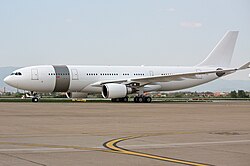
Airbus categorizes its civilian fleet into narrow-body (single-aisle) and wide-body (twin-aisle) aircraft to serve different market needs.
Narrow-Body Aircraft
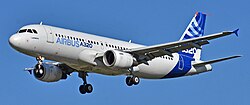
The A320 family is the company's most successful line, with the A320 becoming the best-selling airliner in the world. The modern A320neo (New Engine Option) continues this legacy of efficiency. Additionally, the A220, originally the Bombardier CSeries, serves the smaller 100–150 seat market.
Wide-Body Aircraft
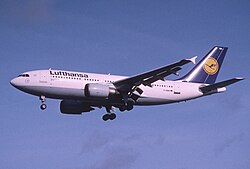
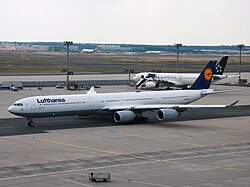
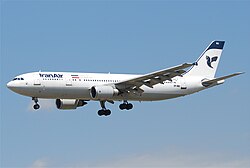
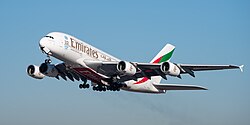
For long-haul travel, Airbus offers a range of high-capacity jets. The A330 and the advanced A350 are the current staples of long-distance flight. Historically, the company produced the A300 and A310, as well as the four-engine A340. The pinnacle of its size engineering was the A380, the world's largest passenger airliner featuring a full double-deck configuration.
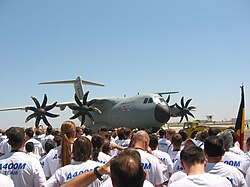
Beyond passenger travel, the company produces corporate jets and military transport aircraft, such as the A400M, which is assembled in Seville, Spain.
Global Manufacturing and Operations
To maintain its massive production scale, Airbus utilizes a distributed manufacturing model with final assembly lines (FAL) strategically placed around the world:
- France: Toulouse (A320 family, A330, and A350).
- Germany: Hamburg-Finkenwerder (A320 family).
- Spain: Seville (A400M and C295).
- China: Tianjin (A320 family).
- United States: Mobile, Alabama (A220 and A320 family).
- Canada: Mirabel, Quebec (A220).
Financial Performance and Market Structure
Airbus maintains a diversified revenue stream, with Commercial Aircraft contributing the vast majority of its income (72%), followed by Defence and Space (17%) and Helicopters (11%).
| Model | Type | Typical Seating | First Flight | Deliveries |
|---|---|---|---|---|
| A220 | Narrow-body | 100–150 | 2013 | 482 |
| A320 | Narrow-body | 107–185 | 1987 | 12,472 |
| A330 | Wide-body | 246–300 | 1992 | 1,661 |
| A350 | Wide-body | 300–410 | 2013 | 699 |
| A380 | Wide-body (Double Deck) | 555–853 | 2005 | 251 |
Innovation and Sustainability
As the aviation industry faces pressure to reduce its carbon footprint, Airbus is focusing on decarbonization. This includes the co-development of biofuels and the ambitious ZEROe project, which aims to develop the first hydrogen-powered commercial aircraft. These concepts utilize fuel cell propeller propulsion systems to eliminate carbon emissions during flight.
Frequently Asked Questions
Who owns Airbus?
Airbus is a public company traded on several exchanges (including Euronext Paris). Its largest shareholders are the governments of France, Germany, and Spain, who hold approximately 10.9%, 10.8%, and 4.1% of the company, respectively.
What is the best-selling Airbus aircraft?
The Airbus A320 is the company's best-selling airliner, having overtaken competitors to become the best-selling airliner in the world.
Where are Airbus aircraft manufactured?
Airbus has a global manufacturing presence with final assembly lines in Toulouse (France), Hamburg (Germany), Seville (Spain), Tianjin (China), Mobile (USA), and Mirabel (Canada).
What is the ZEROe project?
ZEROe is an Airbus initiative focused on developing hydrogen-powered commercial aircraft to achieve zero-emission aviation.
What are the main divisions of Airbus?
The company is divided into three primary sectors: Commercial Aircraft, Defence and Space, and Helicopters.