Africa Demographics: Population Trends, Health, and Ethnic Diversity
Africa is currently experiencing some of the most rapid demographic shifts in human history. With a population estimated at 1.515 billion as of 2024, the continent represents approximately 19% of the global population. This growth is characterized by a significant youth bulge and a dynamic interplay between rising life expectancy and persistent health challenges.
The scale of this expansion is most evident in Nigeria, the continent's most populous nation, which houses 233 million inhabitants as of 2024 and maintains a growth rate of 2.6% per annum.
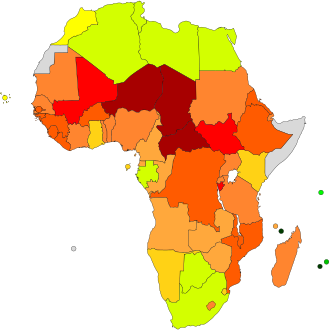
Key Facts
- Total Population: Estimated at 1.515 billion (2024).
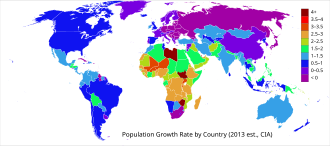
- Growth Rate: Approximately 2.5% per annum (2017 est.).
- Population Density: 50 people per square kilometer (2024 est.).
- Future Projection: Population may reach 2.5 billion by 2050 and 3.8 billion by 2100.
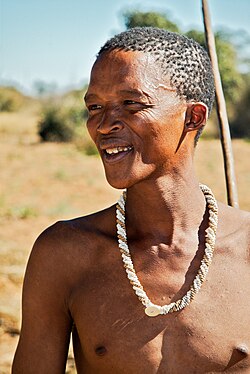
- Linguistic Diversity: Between 1,250 and 2,100 native languages, with some estimates exceeding 3,000.
Population Growth and Projections
The trajectory of Africa's population is steeply upward, driven primarily by East, Middle, and West Africa. These regions are projected to more than quintuple their populations over the 21st century. Middle Africa exhibits the most extreme growth; its population is estimated to increase by 698%, rising from under 100 million in 2000 to nearly 800 million by 2100. A significant portion of this increase is attributed to the Democratic Republic of the Congo.
In contrast, North and Southern Africa are expected to see more moderate increases of 156% and 104%, respectively, over the same period.
| Region | 2000 | 2050 (Projected) | 2100 (Projected) |
|---|---|---|---|
| Eastern Africa | 0.26 | 0.86 | 1.38 |
| Middle Africa | 0.099 | 0.41 | 0.79 |
| North Africa | 0.18 | 0.37 | 0.46 |
| Southern Africa | 0.054 | 0.092 | 0.11 |
| West Africa | 0.24 | 0.73 | 1.07 |
| Total Africa | 0.83 | 2.47 | 3.81 |
Health and Healthcare Development
The Bamako Initiative
Healthcare in sub-Saharan Africa underwent a pivotal shift in September 1987 with the Bamako Initiative. Launched by UNICEF and the World Health Organization (WHO), this charter aimed to increase access to essential medications through community-based revolving drug funds. While initially criticized for issues regarding equity and sustainability, the initiative evolved into a comprehensive strategy to improve health system management and service quality.
Life Expectancy Trends
Life expectancy has seen a steady climb over the last several decades. From an average of 37.46 years between 1950–1955, it rose to 60.23 years by the 2010–2015 period.
![>80 77.5–80 75–77.5 72.5–75 70–72.5 67.5–70 65–67.5 60–65 55–60 50–55 Life expectancy by region in 2015[8][9][10][11]](/images/0b/1d/0b1d7f41f5698d978ff0e47ecd1eb046429e7b07ddfa257ffa0ffeb155e026e7.webp)
Major Health Challenges
Despite progress, the continent faces significant health hurdles. In 2011, sub-Saharan Africa accounted for 69% of the global HIV/AIDS population. However, interventions have proven effective: by 2012, the number of people receiving anti-retroviral treatment was over seven times higher than in 2005. Additionally, AIDS-related deaths in sub-Saharan Africa dropped by 33% between 2005 and 2011.
Other critical health concerns include malaria, tuberculosis, measles, and various neglected tropical diseases, alongside a rising burden of non-communicable diseases such as diabetes.
![World map indicating infant mortality rates per 1000 births in 2006.[12]](/images/e1/85/e185abc1bc9ef5acca7648342ae1e23b4b4b9e4f65aace22b1a63842356db607.jpg)
Ethnicity and Cultural Diversity
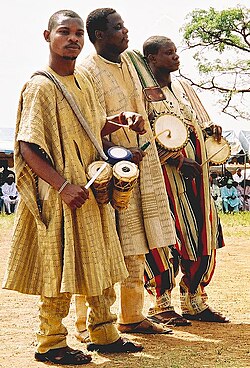
Africa's ethnic landscape is a complex tapestry shaped by indigenous migrations and colonial history. Following the decolonization movements of the 1960s and 1970s, many European settlers emigrated, though significant populations remain in South Africa, Namibia, Zimbabwe, and Réunion. South Africa hosts the largest native European-descended population, including Afrikaners and the British diaspora.
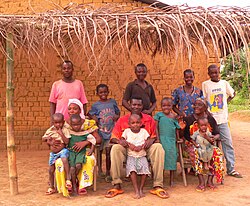
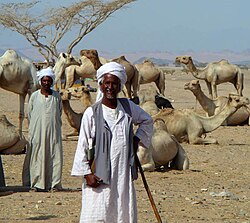
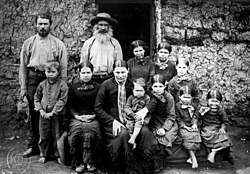
Colonialism also brought Asian populations, particularly from the Indian subcontinent, to East and Southern Africa. Other notable groups include the Malagasy of Madagascar—a blend of Austronesian and native African peoples—and more recent Hispanic immigrants, totaling around 500,000 people primarily residing in South Africa, Kenya, Nigeria, Uganda, and Ghana.
Linguistic Landscape
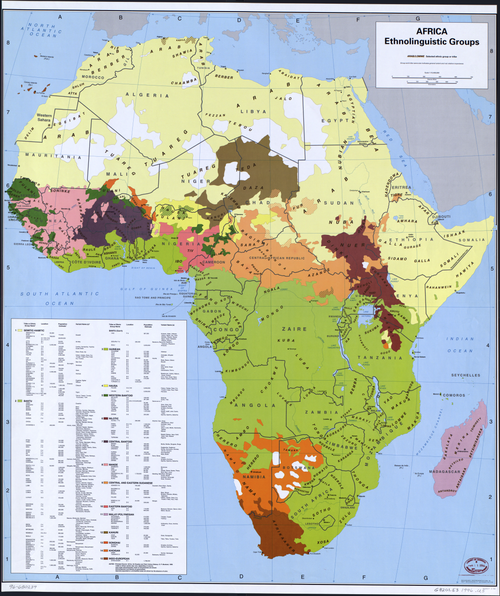
The continent is one of the most linguistically diverse regions on Earth. The Niger-Congo phylum is the largest, with over 500 million speakers, dominated by the Bantu branch. Arabic is the most widely spoken single language, with approximately 330 million speakers. Other major groups include Nilo-Saharan and Afroasiatic languages, while the Khoisan group consists of endangered click languages, such as Khoekhoe.
Frequently Asked Questions
What is the projected population of Africa by 2100?
The population of Africa is projected to reach approximately 3.8 billion by the year 2100, which would represent about 37% of the total world population.
Which region of Africa is growing the fastest?
Middle Africa is experiencing the most extreme growth, with a projected increase of 698% between 2000 and 2100, largely driven by the Democratic Republic of the Congo.
What was the purpose of the Bamako Initiative?
The Bamako Initiative was launched in 1987 to increase access to vital medications in sub-Saharan Africa through community involvement and the creation of revolving drug funds.
What is the most spoken language in Africa?
Arabic is by far the most widely spoken single language on the continent, with an estimated 330 million speakers as of 2017.
How has HIV/AIDS treatment progressed in the region?
Treatment has expanded significantly; by 2012, the number of HIV-positive people in Africa receiving anti-retroviral treatment was more than seven times the number who were receiving treatment in 2005.