Actuators: Types, Mechanisms, and Industrial Applications
In the world of engineering and automation, an actuator is the component responsible for moving or controlling a mechanism or system. By converting energy—whether electrical, fluid, or thermal—into physical motion, actuators serve as the "muscles" of a machine. From the simple camshafts in a car engine to the complex soft robotics used in healthcare, actuators enable precise control over linear and rotary movements.
Key Facts
- Hydraulic actuators provide the highest force due to the incompressibility of liquids.
- Pneumatic actuators are simpler than hydraulics as they often lack return pipes, but require compressors.
- Electric linear actuators offer extreme precision (≤ 0.1 mm) and high cycling rates (> 100 cycles/min).
- Electromechanical actuators can achieve forces up to 100 kN.
- Soft actuators utilize flexible polymers and are primarily designed for human-centric safety and healthcare.
Fluid-Based Actuators
Hydraulic Actuators
Hydraulic actuators utilize the pressure of a liquid, typically oil, to move a piston within a hollow cylindrical tube. This motion can be linear, rotary, or oscillatory. Because liquids are nearly impossible to compress, these systems can exert massive forces. They are characterized by quick response times, low inertia, and the ability to hold a position without significant energy input, though they suffer from limited acceleration.
These systems are categorized as single acting, where fluid pressure is applied to one side and the return is handled by gravity or a spring, or double acting, where fluid pressure drives both the forward and return strokes. In industrial settings, hydraulics often drive rack-and-pinion mechanisms to operate pipeline valves.
Pneumatic Actuators
Pneumatic actuators operate similarly to hydraulic ones but use compressed gas (usually air). They are generally less complex because they do not require return pipes for the working fluid. However, they necessitate a supporting infrastructure of compressors, reservoirs, and filters. Historically, this technology powered the reciprocating motion of steam locomotives via crankshaft mechanisms.
![Pneumatic actuator operating a valve through a rack-and-pinion mechanism.[citation needed]](/images/0c/85/0c8593602af517d7dc3d2fbb90977c95bb3a8ee8ed93b1e71c4bdd213816a869.jpg)
Electric Actuators
Electric actuators use motors to generate torque, which is then converted into the desired motion. These have evolved significantly since 1960 and are divided into several specialized categories.
Electromechanical Actuators (EMA)
An EMA converts the rotational force of an electric motor into linear movement using mechanical components like lead screws, ball screws, planetary roller screws, or toothed belts. They are prized for their accuracy, long lifecycles, and low maintenance requirements, capable of reaching forces around 100 kN. They are commonly found in factory automation and healthcare devices.
Electrohydraulic Actuators
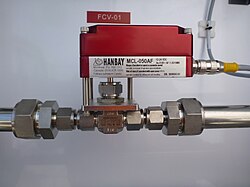
In this hybrid approach, an electric motor drives a hydraulic accumulator to transmit force. This is frequently used in heavy construction equipment and multi-turn valves. When controlling valves, a brake is typically installed to prevent fluid pressure from forcing the valve open, which would otherwise cause damaging oscillations.
Rotary Actuators
Rotary actuators turn a target part over a specific angle, up to 360 degrees. Unlike linear motors, they are not bound to a set distance. While they can be powered manually or by fluids, fluid-powered versions include specific designs such as Vane, Scotch Yoke, Helical, Rack-and-Pinion, and Electrohydraulic. These are widely used in robotic arms and motion control systems.
Linear Actuators
A linear electric actuator utilizes a linear motor—essentially a rotary motor that has been "unrolled" to produce force along its length. These motors come in flat, U-Channel, and Tubular varieties. They are the ideal solution for low loads (up to 30kg) due to their superior speed and accuracy.
Linear motors are highly prevalent in the pharmaceutical, semiconductor, and watchmaking industries (up to 60% of applications) because they can operate in clean, regulated environments without leaking lubricants. However, they are more expensive and have lower force density than pneumatic or electromechanical alternatives.
Specialized Actuation Technologies
Thermal and Magnetic Actuators
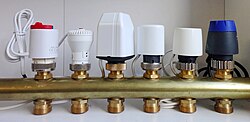
Thermal actuators rely on the expansion of materials when heated. A common example is the bimetallic strip in a non-electronic thermostat, which bends to flip a switch. Some also use shape-memory alloys. Magnetic actuators use externally applied magnetic fields to attract ferromagnetic materials, such as the reed switches used in building security sensors.
Soft Actuators
Soft actuators are made from flexible materials like polymers and liquids, designed for safety and biocompatibility in human-centric robotics. Unlike rigid industrial actuators, soft actuators can adapt to their environment. Many are now produced via 3D printing to eliminate the need for external joints and adhesives.
- Shape Memory Polymers (SMP): Respond to light, heat, pH, or moisture. They exhibit the "shape memory effect" (SME) and are biocompatible.
- Light Activated Polymers (LAP): A subset of SMPs controlled remotely via light frequency or intensity.
- Electroactive Polymers (EAP): Including dielectric elastomers and ionic polymer-metal composites, these respond to electrical excitation.
Comparison of Actuator Technologies
| Type | Power Source | Primary Advantage | Primary Limitation |
|---|---|---|---|
| Hydraulic | Pressurized Liquid | Extremely high force | Limited acceleration |
| Pneumatic | Compressed Gas | Simpler plumbing | Requires external compressors |
| Electromechanical | Electric Motor | High accuracy & long life | Weight and size |
| Linear Electric | Linear Motor | Precision (≤ 0.1 mm) | High cost; low force density |
| Soft | Various Stimuli | Biocompatible & adaptive | Higher response times |
Frequently Asked Questions
What is the difference between a single-acting and double-acting hydraulic actuator?
A single-acting actuator applies fluid pressure to only one side of the piston to create force in one direction, relying on gravity or a spring for the return. A double-acting actuator uses fluid pressure to drive both the extension and the return stroke.
Why are linear electric actuators preferred in pharmaceutical industries?
They are preferred because they can operate in highly regulated clean environments without the risk of air, humidity, or lubricant leakages, while providing high precision and programmable motion.
What is the "shape memory effect" in soft actuators?
The shape memory effect (SME) is the process by which a Shape Memory Polymer (SMP) responds to external stimuli—such as heat, light, moisture, or electrical input—to change or recover its shape.
Why is a brake necessary in electrohydraulic valve actuators?
A brake prevents the fluid pressure from forcing the valve open. Without it, the actuator may enter a cycle of opening and closing (oscillation), which eventually damages the motor and the actuator.
Which actuator provides the highest force density?
Hydraulic actuators generally provide the highest force density because liquids are nearly incompressible, allowing them to exert significantly more force than pneumatic or linear electric systems.