The Tragic Metamorphosis of Actaeon: Hunter Turned Prey
In the vast tapestry of Greek mythology, few stories are as visceral or enduring as that of Actaeon. A famous Theban hero and the son of the priestly herdsman Aristaeus, Actaeon held a prestigious lineage through his mother, Autonoë, making him a member of the ruling House of Cadmus. Like the legendary Achilles, he was even trained by the wise centaur, Chiron.
However, his noble lineage and hunting prowess could not protect him from the divine wrath of the goddess Artemis (known to the Romans as Diana). His story is a haunting exploration of transgression, transformation, and the terrifying moment when the hunter becomes the hunted.
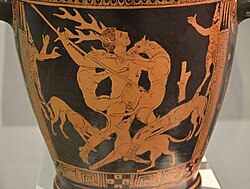
The Myth of the Transgression
While the specific reasons for Actaeon's downfall vary across ancient sources, the core "kernel" of the tale remains constant: a hunter is transformed into a stag and torn apart by his own hounds. The most widely accepted version, popularized by the Hellenistic poet Callimachus, describes a chance encounter in the woods. While hunting, Actaeon stumbled upon Artemis bathing in a secluded pool. Struck by her beauty, he stopped to stare, inadvertently profaning the mystery of her virginity.
In retaliation, Artemis cursed him. In some versions, she forbade him from speaking; if he attempted to cry out, he would be transformed. In others, she directly triggered his metamorphosis. As Actaeon heard the calls of his hunting party and attempted to respond, he was instantly changed into a stag. Distraught, he saw his own reflection in a pond and realized his fate. Unable to communicate his identity, he was pursued and killed by his own dogs, who no longer recognized their master.
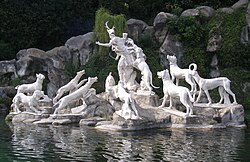
Alternative Motives for Divine Wrath
Ancient authors offered several different interpretations of why Artemis sought such violent revenge:
- Hubris: In Euripides' Bacchae, Actaeon is depicted as having boasted that he was a better hunter than Artemis herself.
- Romantic Rivalry: The Hesiodic Catalogue of Women and the writings of Apollodorus suggest he was a rival to Zeus for the affections of Semele, his mother's sister.
- Unwanted Suitor: Diodorus Siculus recorded a variant where Actaeon's offense was his desire to marry the goddess.
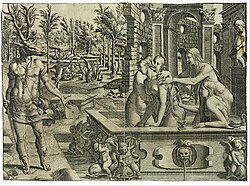
Symbolism and Interpretations
The myth of Actaeon carries deep layers of meaning that have been analyzed by scholars and psychologists alike. In a ritualistic context, some view the story as a symbol of human sacrifice, where the dogs represent the sacrificers and Actaeon represents the victim offered to appease a deity.
From a psychological perspective, Jungian psychologist Wolfgang Giegerich views the metamorphosis as a symbol of spiritual transformation or enlightenment. Additionally, the myth has been used as a metaphor for human curiosity or irreverence. In literature, the term "horned" (referring to his transformation into a stag) has often been used as a symbol for a cuckold, a theme echoed in works ranging from Shakespeare to Robert Burton.
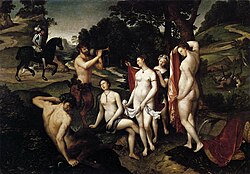
Artistic Legacy and Cultural Impact
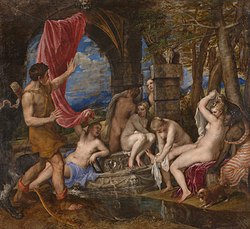
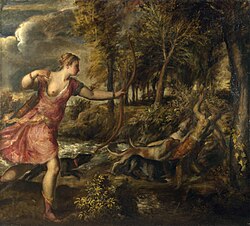
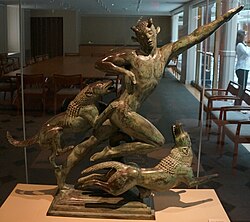
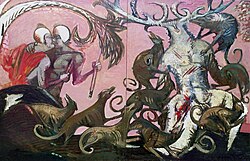
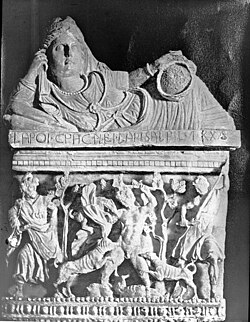
Actaeon has been a frequent subject for artists across centuries. In classical Greek art, he is often depicted as a human being even during his death. However, Renaissance and post-Renaissance artists frequently emphasized the metamorphosis, showing him with a deer's head or a fully transformed stag's body.
The story has permeated various art forms:
- Painting: Titian produced two famous works, Death of Actaeon and Diana and Actaeon.
- Literature: Percy Bysshe Shelley used the myth in his elegy for John Keats, and William Shakespeare alluded to it in Twelfth Night.
- Modern Media: The myth continues to be reinterpreted in contemporary film and installations, such as Matthew Barney's 2019 movie Redoubt.
Key Facts
- Identity: Son of Aristaeus and a member of the House of Cadmus.
- The Crime: Accidental or intentional profanation of Artemis/Diana.
- The Punishment: Transformation into a stag and death by his own hunting hounds.
- The Hounds: Some accounts suggest the dogs were driven by Lyssa (the goddess of rabies/frenzy).
- Geographic Link: A rock in Attica known as the "bed of Actaeon" is associated with the myth.
Summary of Mythological Details
| Element | Details |
|---|---|
| Primary Deity | Artemis (Greek) / Diana (Roman) |
| Transformation | Human to Stag (Deer) |
| Cause of Death | Mauling by his own hunting dogs |
| Key Themes | Hubris, curiosity, spiritual transformation |
| Literary Parallels | Aqht (Ugaritic myth) |
Frequently Asked Questions
What was Actaeon's specific sin?
The most common version is that he accidentally saw the goddess Artemis bathing, which was a violation of her privacy and sanctity. Other versions suggest he boasted of being a better hunter than her or that he sought to marry her.
Why did his own dogs attack him?
Because he had been transformed into a stag, his hounds no longer recognized him as their master. Some ancient sources suggest the goddess Lyssa (representing madness or rabies) infected the dogs to ensure they would attack him.
Are there parallels to other cultures?
Yes. The myth shares similarities with the Ugaritic hero Aqht, who was torn apart by eagles incited by the goddess Anath, and certain Akkadian poems involving a herdsman turned into a wolf.
How is Actaeon depicted in art?
In ancient Greek art, he is often shown as a man being attacked by dogs. In Renaissance art, he is more frequently depicted with a deer's head or as a complete stag to emphasize the metamorphosis.
What does the "bed of Actaeon" refer to?
According to the traveler Pausanias, it refers to a specific rock near a spring in Attica where Actaeon is said to have rested while hunting before seeing Artemis bathing.