Access2Research and the Fight for Open Access Publishing
In the world of academia, a significant barrier often stands between groundbreaking scientific discoveries and the people who need them: the paywall. Access2Research emerged as a pivotal campaign in the United States dedicated to reforming academic journal publishing to ensure that research funded by the public is available to the public.
Led by open access advocates Michael W. Carroll, Heather Joseph, Mike Rossner, and John Wilbanks, the movement sought to challenge the traditional model of scholarly publishing, where taxpayer-funded research is often locked behind expensive subscriptions.
The White House Petition and Its Impact
On May 20, 2012, Access2Research launched a high-profile petition directed at the White House. The core demand was simple yet ambitious: the government should require free internet access to all journal articles resulting from taxpayer-funded research.
The petition operated under a specific White House rule: any petition reaching 25,000 signatures within 30 days would receive an official response. Access2Research achieved this milestone in less than two weeks, demonstrating widespread public and academic support for the cause.
The Executive Directive of 2013
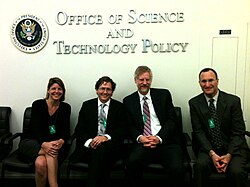
The momentum from the petition led to a tangible policy shift. On February 22, 2013, the White House Office of Science and Technology Policy announced an executive directive. This order required all U.S. Federal Agencies with research and development (R&D) budgets exceeding $100 million to develop public access policies within a twelve-month timeframe.
Building on a Legacy of Reform
Access2Research did not exist in a vacuum; it was the culmination of several previous efforts to democratize scientific knowledge. The campaign built upon earlier initiatives that urged scholars, publishers, funders, and governments to remove paywalls—digital barriers that restrict access to content unless a subscription fee is paid.
One such precursor was The Cost of Knowledge, an initiative targeted at academics that called for lower scholarly journal prices and the promotion of increased access to scientific data.
The NIH Model
The campaign pointed to the NIH Public Access Policy as a successful blueprint. By highlighting this existing mandate, Access2Research argued that the National Institutes of Health's approach to sharing research should be expanded and adopted across all federally funded research sectors.
Key Facts
- Founders: Michael W. Carroll, Heather Joseph, Mike Rossner, and John Wilbanks.
- Petition Goal: Free internet access to taxpayer-funded journal articles.
- Milestone: Reached 25,000 signatures in under two weeks.
- Policy Outcome: Federal agencies with R&D budgets over $100M were ordered to create public access policies.
- Precedent: Used the NIH Public Access Policy as a model for expansion.
| Event/Entity | Detail |
|---|---|
| Launch Date | May 20, 2012 |
| Executive Directive Date | February 22, 2013 |
| Budget Threshold for Agencies | Over $100 Million |
| Primary Objective | Removal of paywalls for public research |
Frequently Asked Questions
What is Access2Research?
Access2Research is a U.S.-based campaign led by open access advocates to reform academic publishing and ensure taxpayer-funded research is freely available online.
What was the specific goal of the 2012 petition?
The petition asked the White House to mandate free internet access to journal articles that arose from research funded by taxpayers.
What happened after the petition reached 25,000 signatures?
The White House Office of Science and Technology Policy issued an executive directive requiring federal agencies with R&D budgets over $100 million to develop public access policies within one year.
What is a paywall in the context of academic research?
A paywall is a digital system that prevents users from accessing scholarly articles unless they pay a fee or have a paid subscription to the journal.
Which existing policy did Access2Research use as an example?
The campaign cited the NIH Public Access Policy as a successful example of a mandate that should be applied to all federally funded research.