Abbo and Gerbert: Pioneers of the Ottonian Renaissance
The late 10th century witnessed a significant intellectual revival known as the Ottonian Renaissance. This era of academic awakening was epitomized by two towering figures: Abbo, the abbot of Saint-Benoît-sur-Loire, and Gerbert, the scholaster of Reims who would eventually ascend to the papacy as Sylvester II. Both born around 940 and passing away within a year of each other (1003 and 1004), these scholars transformed the educational landscape of the West through their mastery of the liberal arts and their dedication to training a new generation of disciples.
Key Facts
- Abbo of Fleury was a master of grammar and dialectic who established a perpetual Julian calendar.
- Gerbert of Aurillac (Pope Sylvester II) introduced advanced astronomical tools and the abacus to his students.
- The period saw a revitalization of dialectic (the art of logical reasoning) through the rediscovery of Boethius's works.
- The quadrivium (arithmetic, geometry, music, and astronomy) became a central focus of scientific study.
- Monastic libraries, such as those at Bobbio and Fleury, grew to hold nearly 600 works each.
Abbo of Fleury: The Scholar-Abbot
Born in Orléans, Abbo's journey began at Saint-Benoît-sur-Loire before 950. He pursued an extensive education in Paris and Reims, eventually returning to Fleury as a scholaster (a master teacher) around 965. His intellectual curiosity led him to England, where he spent time at Ramsey between 985 and 987, before becoming the abbot of Fleury in 988.
Beyond the classroom, Abbo was a fierce defender of his monastery's rights, fighting against simony (the buying or selling of ecclesiastical privileges) and the lay possession of church property. His influence extended to the royal court, where he advised Robert II and conducted diplomatic missions to Rome in 995 and 997. His life ended tragically in 1004, when he was killed by rebellious monks during an inspection of La Réole in Gascony.
Abbo's pedagogical legacy is preserved in works like the Quaestiones grammaticales, which contains answers to questions from his students at Ramsey. He was renowned for his mastery of five liberal arts, though he admitted to a less complete grasp of rhetoric and geometry.
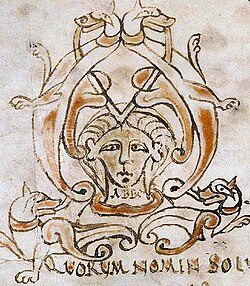
Gerbert of Aurillac: From Scholar to Pope
Gerbert rose from a modest background in Auvergne to become one of the most renowned scholars in the West. After studying in Catalonia and visiting Rome in 970, he was appointed scholaster of Reims in 972. His career was closely tied to the Ottonian dynasty; he served as a tutor to the young Otto III and briefly held the position of abbot of Bobbio in 983.
Gerbert's path to power was fraught with controversy. After a disputed election as archbishop of Reims, he sought refuge with Otto III. In 998, the emperor appointed him archbishop of Ravenna, and in 999, he became Pope Sylvester II. This appointment symbolized the strong imperial control over the papacy during this era. Gerbert died in 1003.
His teaching method was rigorous and humanistic. He prepared students for rhetoric by first grounding them in logical reasoning—specifically categorical and hypothetical syllogisms—and then introducing them to classical poets such as Virgil, Horace, and Lucan. Only after mastering these styles were students entrusted to a sophist to learn the art of debate.
The Growth of Medieval Libraries
The Ottonian Renaissance was fueled by the activity of monastic scriptoria (rooms dedicated to copying manuscripts). Libraries became centers of immense wealth and knowledge. The catalogs of Bobbio Abbey and Fleury Abbey both list nearly 600 works. Gerbert personally invested his wealth into the Bobbio collection, while other scholars like Adso of Montier-en-Der collected works by Cicero, Aristotle, and Porphyry.
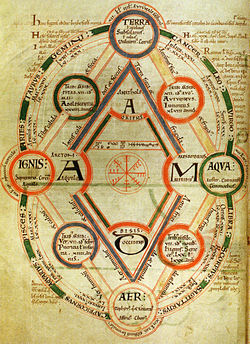
Innovations in Dialectic and Science
The Revitalization of Dialectic
For years, dialectic teaching relied on the logica vetus (old logic), consisting of works by Boethius, Porphyry, and Cicero. In the late 10th century, exchanges with the Byzantine Empire led to the rediscovery of Boethius's treatises on Categorical and Hypothetical Syllogisms, as well as his works on Definitions and Divisions.
Gerbert and Abbo both integrated these texts into their teaching. Gerbert's mastery of logic was evident in his 997 treatise De rationalis et ratione uti, while Abbo was praised by his disciple Aimoin for his ability to "untangle" complex dialectical knots. This momentum continued with Fulbert of Chartres and Abbot Majolus of Cluny into the 11th century.
Advancements in the Quadrivium
The quadrivium—the four mathematical arts—saw significant practical application during this period. Abbo focused on astronomy, creating a star catalog and a commentary on Victorinus of Aquitaine's Calculus to establish a perpetual Julian calendar.
Gerbert's scientific contributions were even more tangible. He used a solid wooden sphere to demonstrate the movement of stars and the polar axis to his students. In music, he utilized the monochord (a single-string instrument) to teach tones, semitones, and modes.
Perhaps his most significant tool was the abacus, a calculating table with twenty-seven columns and a thousand horn markers. This device allowed for rapid multiplication and division. While it is debated whether Gerbert introduced Arabic numerals to Gaul, his student Fulbert was the first to demonstrably use them. However, the full adoption of the decimal system would not occur until the 12th and 13th centuries with the works of Gerard of Cremona and Fibonacci.
| Feature | Abbo of Fleury | Gerbert of Aurillac |
|---|---|---|
| Primary Role | Abbot of Saint-Benoît-sur-Loire | Scholaster of Reims / Pope Sylvester II |
| Key Scientific Focus | Julian Calendar & Star Catalogs | Astronomy, Music, & Arithmetic |
| Teaching Tools | Grammatical Treatises | Wooden Spheres, Monochord, Abacus |
| Dialectic Influence | Commentaries on Boethius | De Ratione (997) |
Frequently Asked Questions
Who were Abbo and Gerbert?
They were two of the most influential scholars of the Ottonian Renaissance, born around 940. Abbo was the abbot of Fleury, and Gerbert was the scholaster of Reims who later became Pope Sylvester II.
What was the 'quadrivium' taught by these scholars?
The quadrivium consisted of four mathematical disciplines: arithmetic, geometry, music, and astronomy. Gerbert and Abbo advanced these fields through the use of physical tools like the abacus and astronomical spheres.
How did the study of dialectic change during this time?
Dialectic was revitalized by the rediscovery of Boethius's works on syllogisms, definitions, and divisions, which were reintroduced to the West via the Byzantine Empire.
Did Gerbert of Aurillac introduce Arabic numerals to Europe?
This is a subject of historical debate. While Gerbert's work with the abacus and his influence on students like Fulbert (who used Arabic numerals) suggest a connection, the widespread use of the decimal system only occurred later through Fibonacci and Gerard of Cremona.
What role did libraries play in the Ottonian Renaissance?
Libraries served as the foundation for intellectual growth. Monastic scriptoria produced and preserved hundreds of works, with the libraries at Bobbio and Fleury each housing nearly 600 volumes of classical and religious texts.