2025 Gulf Coast Blizzard: A Historic Winter Storm Analysis
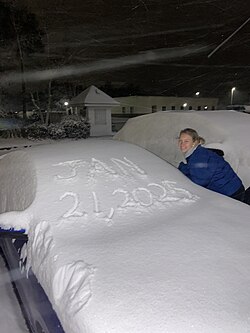
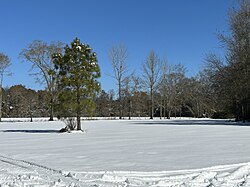
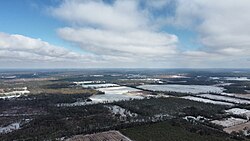
Between January 20 and January 22, 2025, the United States Gulf Coast experienced a meteorological anomaly of unprecedented proportions. Known unofficially as Winter Storm Enzo, this rare and powerful blizzard brought significant snowfall to regions that seldom see wintry precipitation. It stands as the first recorded blizzard on the Gulf Coast and the most significant winter event to strike the region since 1895.
The storm originated on January 20 from an area of low pressure in the western Gulf of Mexico, developing along an Arctic cold front. As it tracked eastward, it deposited heavy snow and ice across the coastlines before moving offshore on January 22. This system eventually evolved into Storm Éowyn in the northeastern Atlantic.
Key Facts
- Peak Snowfall: 13.4 inches (34 cm) recorded near Grand Coteau, Louisiana.
- Human Impact: 13 fatalities and over 77,000 power outages.
- Economic Cost: Estimated damages of $200 million (2025 USD).
- Meteorological Intensity: Lowest pressure reached 939 mbar (hPa).
- Historical Significance: Broke single-day snowfall records in Louisiana and Florida that had stood for nearly a century.
Meteorological History and Scale
The storm was classified as a Category 1 "Notable" blizzard with a NOAA Regional Snowfall Index of 2.93. The system's intensity was marked by a minimum central pressure of 939 mbar (27.73 inHg). The storm's lifecycle began on January 20, exited the mainland on January 22, and finally dissipated on January 27, 2025.
| Metric | Detail |
|---|---|
| Duration | January 20 – January 22, 2025 |
| Max Snowfall | 13.4 in (Grand Coteau, LA) |
| Max Ice | 0.25 in (Hebbronville, TX) |
| Fatalities | 13 |
| Financial Loss | $200 million |
| Power Outages | >77,000 |
Regional Impacts and Records
Texas
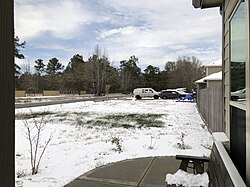
In Texas, the storm brought freezing rain and snow to the Houston area starting January 20. La Porte saw up to 6 inches of snow, while League City recorded 0.18 inches of freezing rain. The weather caused dozens of road closures and a multi-car pileup in southwestern Texas resulting in multiple deaths. Beaumont recorded an all-time monthly low of 11°F (-11.7°C).
Louisiana
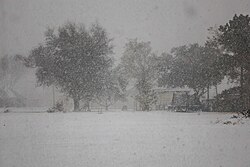
Louisiana experienced some of the most severe conditions, with the National Weather Service issuing its first-ever blizzard warning for southwestern parishes. Grand Coteau recorded the storm's maximum snowfall of 13.4 inches. New Orleans saw 10 inches, and Baton Rouge recorded 7.6 inches, breaking a single-day record from February 1895. Extreme lows were recorded in New Iberia (2°F) and Lafayette (4°F).
Mississippi and Alabama
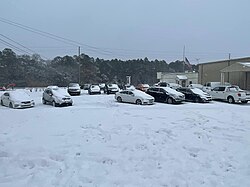
Mississippi saw significant accumulations, with Ocean Springs reporting up to 9 inches. In Alabama, Bradley measured 11.8 inches, and Mobile Regional Airport recorded 7.5 inches, breaking a record set in 1895. The weight of the snow caused the roof of the Mobile Civic Center, which was under demolition, to collapse.
Georgia and Florida
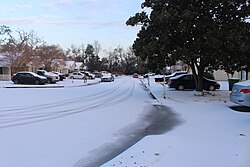
Georgia's impact was concentrated in the metro Atlanta area, where 1.1 inches of snow caused major traffic jams and stranded hundreds of cars. In Florida, Governor Ron DeSantis declared a state of emergency as the Panhandle saw historic totals. Milton recorded 10 inches—more than double the state's previous single-storm record—while Pensacola recorded 8.9 inches.

The Carolinas
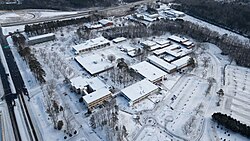
The storm extended its reach into the Southeast. North Carolina saw widespread reports of 4–6 inches, with the Wright Brothers National Memorial recording 9.0 inches. South Carolina's North Myrtle Beach received 4.5 inches, the region's largest snowstorm since 1989.
Frequently Asked Questions
What made the 2025 Gulf Coast blizzard unique?
It was the first recorded blizzard on the Gulf Coast and the most significant winter storm to hit the region since 1895, bringing heavy snow to areas that rarely experience it.
Which city recorded the highest snowfall?
The highest snowfall was recorded near Grand Coteau, Louisiana, with a total of 13.4 inches (34 cm).
How many people were affected by power outages?
More than 77,000 people lost power, with the majority of outages occurring in Florida and Louisiana.
What happened to the storm after it left the U.S. coast?
After moving offshore on January 22, the system evolved into Storm Éowyn in the northeastern Atlantic.
Did the storm break any long-standing records?
Yes, Louisiana and Florida both broke single-day snowfall records that had stood for nearly a century, and Mobile, Alabama, broke a 130-year-old snow record.