2016 Copa del Rey Final: Barcelona Secure Record 28th Title
On 22 May 2016, the football world turned its attention to the Vicente Calderón Stadium in Madrid for the final of the 2015–16 Copa del Rey. This 114th edition of Spain's premier knockout competition saw defending champions Barcelona face off against Sevilla in a high-stakes encounter to determine who would lift the trophy.
The match was a clash of titans, featuring two of Spain's most successful clubs. Barcelona entered the game seeking to extend their dominance in the competition, while Sevilla looked to add another trophy to their storied history. The contest proved to be a grueling battle of endurance, eventually decided in extra time.
Key Facts
- Winner: Barcelona (2–0 after extra time)
- Record: Barcelona achieved a record-extending 28th Copa del Rey title.
- Man of the Match: Andrés Iniesta (Barcelona).
- Venue: Vicente Calderón Stadium, Madrid.
- Attendance: 54,907 spectators.
- Key Performers: Lionel Messi provided both assists for Barcelona's goals.
The Road to the Final
Barcelona's Dominant Run
Barcelona's path to the final was characterized by offensive brilliance, scoring 25 goals and conceding only five across eight matches. After a goalless first leg against Villanovense, they surged through the tournament with a 6–1 victory in the second leg. They overcame city rivals Espanyol in the round of 16 and defeated Athletic Bilbao in the quarter-finals.
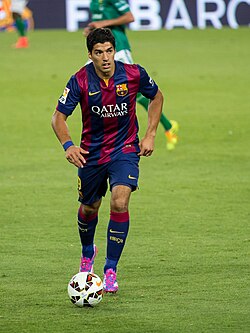
The semi-finals saw a massive 7–0 victory over Valencia in the first leg, where Luis Suárez and Lionel Messi dominated the scoreline. A 1–1 draw in the second leg at the Mestalla secured their place in the final.
Sevilla's Steady Progress
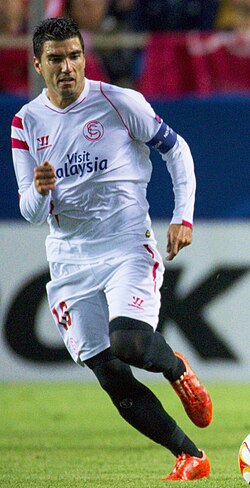
Sevilla mirrored Barcelona's efficiency, scoring 22 goals in eight games. They began with a convincing aggregate win over UD Logroñés and a dominant performance against municipal rivals Real Betis in the round of 16. After dispatching Mirandés in the quarter-finals, they faced a tough Celta Vigo side in the semi-finals, winning the first leg 4–0 and holding on through a 2–2 draw in the second leg.
Match Analysis: A Battle of Attrition
The final was a tense affair with few clear-cut chances during the regulation 90 minutes. The match was marked by high tension and disciplinary issues, resulting in three red cards. Javier Mascherano was the first to be sent off in the 36th minute for a foul on Kevin Gameiro. Later, in injury time, Sevilla's Éver Banega received a red card for denying Neymar an obvious goalscoring opportunity.
With the score tied at 0–0, the game proceeded to extra time (the additional 30 minutes played to break a deadlock). The deadlock was finally broken in the 97th minute when Jordi Alba scored a low, left-footed finish following a precise pass from Lionel Messi.
As Sevilla pushed for an equalizer, Barcelona struck again in the final moments. Neymar scored in the 120+2 minute with a low finish from the left, again assisted by Messi. The match ended in chaos as Sevilla's Daniel Carriço was sent off in stoppage time after receiving two yellow cards within 30 seconds.
Final Match Summary
| Detail | Barcelona | Sevilla |
|---|---|---|
| Final Score | 2 | 0 (a.e.t.) |
| Goal Scorers | Jordi Alba (97'), Neymar (120+2') | None |
| Assists | Lionel Messi (2) | None |
| Red Cards | Javier Mascherano | Éver Banega, Daniel Carriço |
| Head Coach | Luis Enrique | Unai Emery |
Frequently Asked Questions
Who won the 2016 Copa del Rey final?
Barcelona won the final, defeating Sevilla 2–0 after extra time to claim their 28th title.
Who was named the Man of the Match?
Andrés Iniesta was named the man of the match for his overall performance, despite Lionel Messi providing both assists for the goals.
Where was the match played?
The final took place at the Vicente Calderón Stadium in Madrid, which was the home ground of Atlético Madrid.
How many red cards were issued during the game?
Three red cards were issued: one for Barcelona's Javier Mascherano and two for Sevilla's Éver Banega and Daniel Carriço.
What happened regarding the Estelada flags?
There was an initial ban on the Estelada (Catalan independence flag) for security reasons, but a Madrid judge overruled the ban, citing freedom of expression.