1989 Copa América: Brazil's Historic Return to Glory
The 1989 Copa América stands as a landmark moment in South American football history. Hosted by Brazil from July 1 to July 16, the tournament brought together all ten CONMEBOL member nations in a fierce competition for continental supremacy. For the host nation, the event was more than just a tournament; it was a quest to reclaim a lost legacy.
Brazil entered the competition having endured a significant drought. They had not won an official championship since the 1970 World Cup, and their last Copa América title dated back to 1949. The 1989 victory finally broke this 19-year streak, marking a triumphant return to the top of the podium.
Key Facts
- Champions: Brazil (4th title)
- Host Country: Brazil
- Top Scorer: Bebeto (6 goals)
- Best Player: Rubén Sosa
- Total Attendance: 968,976 spectators
- Final Match Score: Brazil 1–0 Uruguay
Tournament Structure and Venues
The competition was organized into two groups of five teams. In the first round, teams played a round-robin format where a win earned two points, a draw earned one, and a loss earned none. The top two teams from each group advanced to the final round.
To manage the scale of the event, matches were distributed across four host cities and four major stadiums:
- Rio de Janeiro: Estádio do Maracanã (Capacity: 145,000)
- Goiânia: Estádio Serra Dourada (Capacity: 70,000)
- Recife: Estádio do Arruda (Capacity: 80,000)
- Salvador: Estádio Fonte Nova (Capacity: 60,000)
The Road to the Final
Group A saw a tight battle between Paraguay and Brazil. While Paraguay finished top of the group, Brazil secured their advancement with a strong performance, including a 2–0 victory over Paraguay. In Group B, Argentina and Uruguay emerged as the dominant forces, with Argentina topping the group.
The final round featured a league format among the four qualifying teams: Brazil, Uruguay, Argentina, and Paraguay. Brazil dominated this stage, remaining undefeated across three matches. They secured critical wins against Argentina (2–0) and Paraguay (3–0), setting the stage for a climactic finale.
The final match took place on July 16 at the Estádio do Maracanã, where Brazil defeated Uruguay 1–0. In a poetic twist of history, this victory occurred exactly 39 years to the day after the 1950 FIFA World Cup Final was held at the same venue.
Individual Brilliance
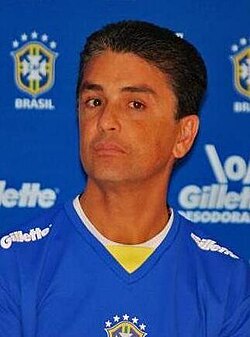
The tournament was defined by the clinical finishing of Bebeto, who finished as the top scorer with six goals. His contributions were vital, particularly during the final group stage. While Bebeto led the scoring, Rubén Sosa was recognized as the best player of the tournament for his outstanding performances.
Tournament Summary
| Category | Detail |
|---|---|
| Champions | Brazil |
| Runners-up | Uruguay |
| Third Place | Argentina |
| Fourth Place | Paraguay |
| Total Matches | 26 |
| Total Goals | 55 (2.12 per match) |
| Average Attendance | 37,268 per match |
Frequently Asked Questions
How long had Brazil gone without an official title before 1989?
Brazil had gone 19 years without an official championship, with their last major title being the 1970 World Cup.
Who was the top scorer of the 1989 Copa América?
The Brazilian striker Bebeto was the top scorer, netting a total of six goals during the tournament.
Which stadium hosted the final match?
The final match between Brazil and Uruguay was held at the Estádio do Maracanã in Rio de Janeiro.
What was the scoring system used in the first round?
In the first round, teams were awarded two points for a win, one point for a draw, and zero points for a loss.
Who was named the best player of the tournament?
Rubén Sosa was named the best player of the 1989 Copa América.