1963 South American Championship: Bolivia's Historic First Title
The 1963 South American Championship stands as one of the most significant milestones in South American football history. Held from March 10 to March 31, 1963, the tournament saw Bolivia achieve a monumental feat by capturing their first-ever title in the competition now known as the Copa América.
The event was hosted across two cities in Bolivia, utilizing the high-altitude conditions of La Paz and the sporting facilities of Cochabamba. While the tournament featured seven competing nations, it was marked by geopolitical tensions and withdrawals that shaped the final lineup of participants.
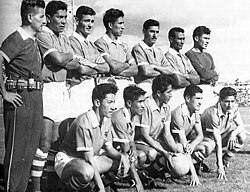
Key Facts
- Champions: Bolivia (their first and only title to date).
- Host Nation: Bolivia.
- Top Scorer: Carlos Alberto Raffo (Ecuador) with 6 goals.
- Total Goals: 91 goals scored across 21 matches (average of 4.33 per game).
- Venues: Estadio Hernando Siles (La Paz) and Estadio Félix Capriles (Cochabamba).
Tournament Structure and Participation
The 1963 edition featured seven teams from a single confederation. However, the roster of participants was affected by external conflicts and logistical disputes. Chile was not invited due to the Lauca River conflict with Bolivia, while Uruguay withdrew specifically because La Paz was designated as one of the tournament sites. Additionally, Venezuela did not enter the competition.
Venues and Capacities
Matches were split between two primary stadiums, providing a mix of atmospheric settings for the fans:
- Estadio Hernando Siles in La Paz, with a capacity of 51,000.
- Estadio Félix Capriles in Cochabamba, with a capacity of 36,000.
The Road to Victory
The tournament followed a round-robin format where teams played each other to determine the final standings. Bolivia's path to the championship was characterized by high-scoring encounters and resilience. They began the tournament with a thrilling 4–4 draw against Ecuador before securing a series of critical wins.
Bolivia's dominance was cemented in their final matches, including a 2–0 victory over Paraguay and a hard-fought 3–2 win against Argentina. The crowning moment came in their final match on March 31, where Bolivia defeated Brazil 5–4 in a high-scoring spectacle in front of 25,000 spectators.
Final Standings Table
| Team | Pld | W | D | L | GF | GA | GD | Pts |
|---|---|---|---|---|---|---|---|---|
| Bolivia | 6 | 5 | 1 | 0 | 19 | 13 | +6 | 11 |
| Paraguay | 6 | 4 | 1 | 1 | 13 | 7 | +6 | 9 |
| Argentina | 6 | 3 | 1 | 2 | 15 | 10 | +5 | 7 |
| Brazil | 6 | 2 | 1 | 3 | 12 | 13 | -1 | 5 |
| Peru | 6 | 2 | 1 | 3 | 8 | 11 | -3 | 5 |
| Ecuador | 6 | 1 | 2 | 3 | 14 | 18 | -4 | 4 |
| Colombia | 6 | 0 | 1 | 5 | 10 | 19 | -9 | 1 |
Statistical Highlights
The 1963 championship was an offensive powerhouse, with 91 goals scored by 40 different players. Notably, no own goals were recorded during the entire tournament. The individual standout was Carlos Alberto Raffo of Ecuador, who finished as the top scorer with 6 goals.
Frequently Asked Questions
Who won the 1963 South American Championship?
Bolivia won the tournament, marking the first and only time they have claimed the title in the history of the competition.
Why were Chile and Uruguay absent from the tournament?
Chile was not invited due to the Lauca River conflict with Bolivia, and Uruguay withdrew because La Paz was selected as one of the host cities.
Who was the top goalscorer of the event?
Carlos Alberto Raffo from Ecuador was the top scorer, netting a total of 6 goals.
How many goals were scored in total during the 1963 tournament?
A total of 91 goals were scored across 21 matches, averaging approximately 4.33 goals per match.
Which stadiums hosted the matches?
The matches were held at the Estadio Hernando Siles in La Paz and the Estadio Félix Capriles in Cochabamba.