1919 South American Championship: Brazil's Historic First Title
The 1919 South American Championship of Nations marked a pivotal moment in continental football, serving as the third edition of the tournament for South American national teams. Hosted in the vibrant city of Rio de Janeiro, Brazil, from May 11 to May 29, the competition brought together four of the region's most formidable sides in a battle for supremacy.
The tournament featured Brazil, Argentina, Chile, and the defending champions, Uruguay. All matches were played at a single venue, the Estádio das Laranjeiras, which hosted a total of 132,500 spectators throughout the event.
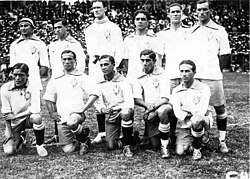
Key Facts
- Champions: Brazil (their first-ever title).
- Host City: Rio de Janeiro, Brazil.
- Top Scorers: Arthur Friedenreich and Neco (4 goals each).
- Longest Match: The playoff final lasted 150 minutes.
- Total Goals: 27 goals scored across 7 matches.
Tournament Format and Competition
The 1919 championship operated without a qualifying phase. The four participating nations competed in a single group, playing each other once. Under the scoring system of the era, teams were awarded two points for a win, one for a draw, and zero for a defeat. In the event of a tie at the top of the standings, a playoff match was required to determine the champion.
The Road to the Final
Brazil entered the tournament with strong momentum, opening with a dominant 6–0 victory over Chile. They followed this with a 3–1 win against Argentina and a 2–2 draw with Uruguay. This left both Brazil and Uruguay tied at the top of the table with five points each, necessitating a decisive playoff match.
| Team | Played | W | D | L | GF | GA | GD | Pts |
|---|---|---|---|---|---|---|---|---|
| Brazil | 3 | 2 | 1 | 0 | 11 | 3 | +8 | 5 |
| Uruguay | 3 | 2 | 1 | 0 | 7 | 4 | +3 | 5 |
| Argentina | 3 | 1 | 0 | 2 | 7 | 0 | 2 | |
| Chile | 3 | 0 | 3 | 1 | 12 | -11 | 0 |
The Marathon Playoff
The final playoff on May 29 remains one of the most extraordinary matches in the competition's history. After 90 minutes of regulation time ended in a 0–0 stalemate, the captains and the referee agreed to play two 15-minute halves of extra time. When the score remained tied after 120 minutes, they agreed to a second extra time period of another two 15-minute halves.
The match finally concluded after 150 minutes of play, when Arthur Friedenreich scored in the 122nd minute to secure a 1–0 victory for Brazil, granting them their first continental championship.
Tragedy and Legacy
The triumph was overshadowed by a tragedy the following day. Uruguayan goalkeeper Roberto Chery passed away in a Rio de Janeiro hospital due to a strangulated hernia. Chery had been severely injured while attempting to stop a goal during the match against Chile; because substitutions were not permitted at the time, he had been forced to remain on the pitch for the duration of the game.
In a gesture of sportsmanship and fraternity, a scheduled friendly between Brazil and Uruguay was canceled. Instead, Argentina stepped in to play Brazil in a match renamed the Copa Roberto Chery to honor the fallen goalkeeper. To further mark the occasion, Argentina wore Uruguay's traditional light-blue jerseys, while Brazil wore the colors of the Uruguayan club Peñarol.
Frequently Asked Questions
Who won the 1919 South American Championship?
Brazil won the tournament, securing their first-ever title after defeating Uruguay in a playoff match.
Who were the top scorers of the tournament?
Arthur Friedenreich and Neco shared the top scorer honor, with each netting 4 goals.
Why was the final match so long?
The final lasted 150 minutes because the captains and referee agreed to two separate periods of extra time after the match remained tied at 0–0 through regulation and the first extra time period.
What happened to Roberto Chery?
Roberto Chery, the Uruguayan goalkeeper, died of a strangulated hernia the day after the final, resulting from an injury sustained during the match against Chile.
Where were the matches played?
All matches took place at the Estádio das Laranjeiras in Rio de Janeiro, Brazil.